Jump to section
- How to Dispose of Each Appliance: Quick Answer
- Refrigerators and Freezers: Why Freon Handling Matters
- Washers, Dryers, and Dishwashers: Donate, Scrap, or Haul Away
- Stoves, Ovens, and Water Heaters: What Makes Them Different
- Utility Rebates and Scrap Value: Getting Something Back
- Appliance Haul Away vs DIY Disposal
- FAQs
Every appliance eventually breaks down, and then it just sits there. A fridge blocking half the garage, a dead washer in the basement, a water heater leaking rust in the utility closet. Each one has different disposal rules, and getting one wrong can mean a fine, a refused pickup, or a truck full of refrigerant you can't legally release into the air. This guide breaks down disposal rules, rebates, and scrap value for every major appliance, plus when booking an appliance haul away beats renting a truck yourself.
Key takeaways
- Refrigerators, freezers, and window AC units hold refrigerant that federal law requires a certified technician to recover before the unit can be scrapped or recycled.
- Many electric utilities pay $25 to $75 to take a working fridge or freezer off your hands through a rebate program.
- Washers, dryers, stoves, and dishwashers have real scrap value as metal, typically $5 to $20 per unit depending on size and local scrap prices.
- Water heaters must be fully drained before pickup; a full tank can weigh 300 pounds or more and damage stairs or flooring.
- An appliance haul away service handles refrigerant recovery, draining, and disposal in one visit instead of separate trips to a scrapyard or transfer station.
How to Dispose of Each Appliance: Quick Answer
The right disposal method depends on the appliance: refrigerants need certified recovery, metal appliances carry scrap value, and anything still working is usually worth donating before it gets hauled away. The table below covers the main rule and typical value for each type.
| Appliance | Special Rule | Best First Option | Typical Scrap/Rebate Value |
|---|---|---|---|
| Refrigerator/Freezer | Refrigerant recovery required | Donate if working | $25-$75 rebate |
| Washer/Dryer | No refrigerant, heavy steel | Donate if working | $5-$15 scrap |
| Stove/Range (gas) | Gas line must be disconnected first | Scrap or donate | $10-$20 scrap |
| Dishwasher | Check local electronics rules | Donate or scrap | $5-$10 scrap |
| Water Heater | Tank must be fully drained | Scrap | $10-$15 scrap |
Refrigerators and Freezers: Why Freon Handling Matters
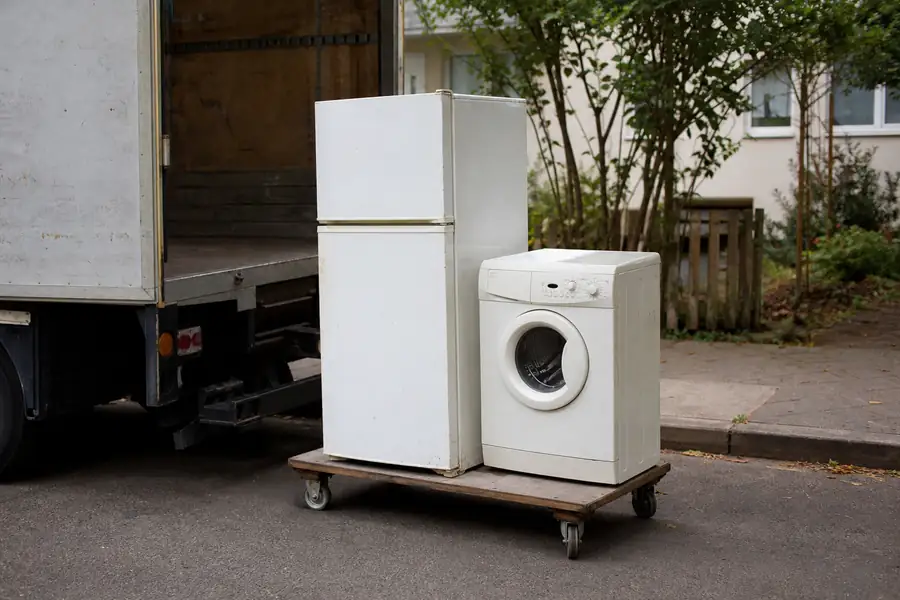
Refrigerators and freezers hold refrigerant, a coolant gas commonly called freon that federal law prohibits releasing into the air, and it has to be recovered by a certified technician before the unit can be scrapped or recycled. Most curbside bulk pickups and scrapyards will turn away a fridge without proof that refrigerant was removed. Junk Rhinos' Appliance Removal service coordinates certified refrigerant recovery as part of the pickup, so there's no separate call to schedule.
If the unit still cools, donation is usually the better move. Habitat for Humanity ReStores and local appliance resellers often take working fridges and freezers for free pickup, and many electric utilities run rebate programs that pay $25 to $75 to retire an old, working unit early because it saves more on the grid than the rebate costs.
Washers, Dryers, and Dishwashers: Donate, Scrap, or Haul Away
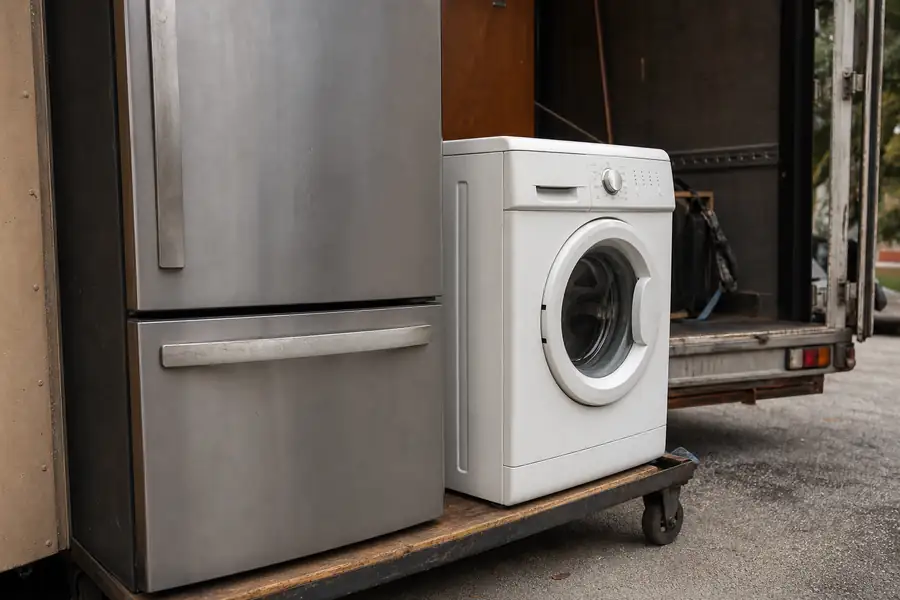
Washers, dryers, and dishwashers carry real scrap value as steel and have no refrigerant restrictions, so the fastest legal path is donation if the unit still runs and scrapping if it doesn't. A standard scrapyard pays $5 to $20 per unit depending on size and current metal prices, though the payout rarely covers the cost of getting a 150 to 200 pound machine down a flight of stairs.
That weight is where most DIY plans stall. A washer full of standing water or a dryer wedged in a tight laundry closet takes two people and a dolly at minimum, and a basement staircase makes it worse. This is the kind of job that turns into a same-day call for appliance removal once someone actually tries to move the thing.
Stoves, Ovens, and Water Heaters: What Makes Them Different
Gas stoves and water heaters need extra prep that electric appliances don't: the gas line has to be shut off and disconnected, and a water heater tank has to be drained completely before it can be lifted. A full 40 or 50 gallon tank weighs 300 pounds or more, and hauling it out still full is a good way to flood a hallway or throw out a back.
Electric ranges and built-in ovens scrap the same as any other major appliance once disconnected. Water heaters are almost always scrapped rather than donated, since most buyers want a new unit with a warranty rather than a used tank. In flood-prone regions like Florida, water heater and appliance haul away calls spike after storms, when flooded units can't be salvaged and have to come out fast.
Utility Rebates and Scrap Value: Getting Something Back
Utility rebate programs and scrap yards are the two ways to get money back for an old appliance, and which one applies depends on whether the unit still works. A working refrigerator or freezer usually qualifies for a $25 to $75 utility rebate; a dead one only has scrap value, typically $5 to $20 depending on the metal and the appliance's size.
These numbers explain why most people don't bother separating the trip themselves. Junk Rhinos prices appliance removal by the space items take up in the truck rather than by weight, and you can see how that works on the pricing page before booking.
Appliance Haul Away vs DIY Disposal
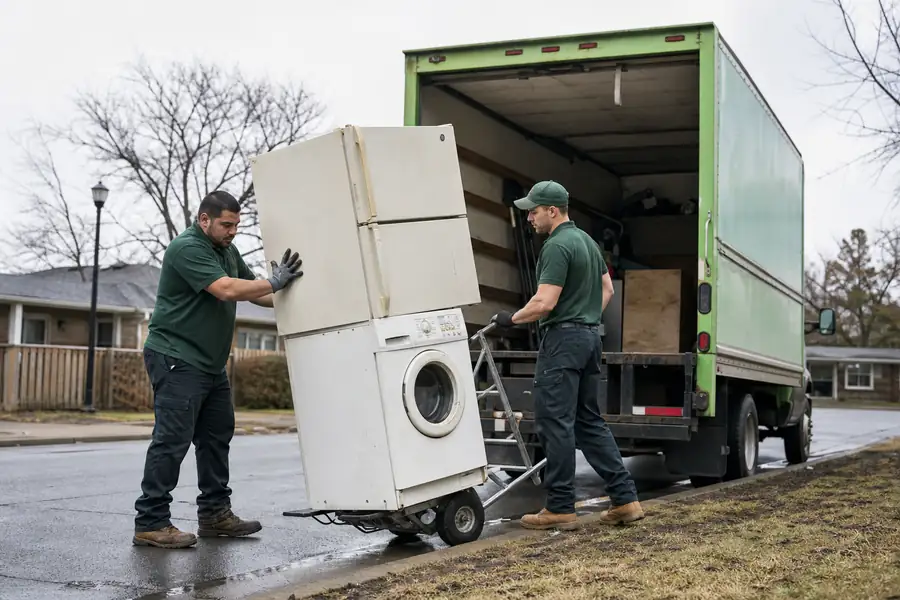
An appliance haul away service costs more upfront than a free scrapyard drop-off, but it replaces the truck rental, the dolly, the stairs, and the risk that a scrapyard refuses a fridge without a refrigerant certificate. Junk Rhinos confirms a firm price on-site, in writing, before any work starts, following the same process outlined on the how it works page, with no deposit required.
Working appliances get donated where possible; the rest gets scrapped or recycled instead of landfilled. Request a free estimate and the crew does the lifting, draining, and disconnecting themselves.
Frequently asked questions
How much does appliance haul away cost?
Cost depends on how many appliances you're removing and how much room they take up in the truck, but a single major appliance like a fridge or washer typically runs less than a full truckload job. Getting a free on-site estimate is the most accurate way to know your price before booking.
Can I put a refrigerator on the curb for trash pickup?
Most cities won't take a refrigerator or freezer at the curb unless the refrigerant has already been professionally recovered, and many require a sticker or certificate proving it. Check with your local sanitation department before setting one out, since an uncertified unit is often left behind or fined.
Do I need to empty or drain appliances before pickup?
Yes. Refrigerators and freezers should be emptied of food, washers should be drained of standing water, and water heaters need the tank fully drained before anyone lifts them. A loaded appliance is heavier, harder to maneuver, and more likely to leak during the move.
What happens to appliances after they're hauled away?
Working appliances usually go to donation centers or resale, while broken ones are scrapped for metal or recycled through a certified facility. Refrigerants are recovered separately and disposed of according to federal rules rather than vented or landfilled.
Can I get paid for an old appliance?
Sometimes. Utility companies often pay $25 to $75 to retire a working refrigerator or freezer early, and scrap yards pay a smaller amount, usually $5 to $20, for dead metal appliances. It's not a big payout, but it offsets part of the cost of getting the unit out.