
Jump to section
Downsizing for seniors is rarely just a logistics project. It means sorting through decades of furniture, photographs, and keepsakes while making room for a smaller, safer home. Whether you're planning your own move or helping parents downsize, a clear plan keeps the job from turning into a six-week standoff with a closet.
This guide breaks the work into room-by-room tasks on a 3-month timeline, so nothing gets rushed and nothing gets shoved into a final-weekend panic.
Key takeaways
- Measure the new home's rooms and doorways before deciding what furniture stays.
- Spread the work over roughly 3 months, tackling one or two rooms per week.
- Sort heirlooms by who in the family actually wants them, not by resale value.
- Donation pickups, estate sales, and consignment each fit different volumes of leftover belongings.
- A NASMM-certified senior move manager can coordinate sorting, packing, and logistics for families who need extra hands.
- Build in breaks. A senior downsizing checklist moves faster when nobody rushes the hard decisions.
Measure the New Space Before You Pack a Single Box
Measuring the new home's rooms, doorways, and closets before sorting anything prevents the single biggest downsizing mistake: packing furniture that won't fit. A floor plan is just a scaled drawing of the rooms, and sketching one on graph paper (or using a free room-planning app) lets you test where the sofa, bed, and dresser will actually sit before moving day.
Walk through the current home with that floor plan in hand. Anything wider than a new doorway, or too big for a mapped-out wall, gets flagged as a donate-or-sell item on the first pass, before sentiment enters the conversation.
This single step for downsizing for seniors saves families from renting a truck for furniture that ends up sitting in the garage of the new place.
A 3-Month Downsizing for Seniors Timeline
A 3-month timeline gives most seniors enough time to sort an entire household without rushing emotional decisions. It splits roughly into a planning month, a sorting month, and a moving month.
| Month | Focus | Key Tasks |
|---|---|---|
| Month 1 | Plan and measure | Measure new space, sketch floor plan, start heirloom conversations |
| Month 2 | Sort room by room | Work the senior downsizing checklist, schedule donation pickups |
| Month 3 | Finalize and move | Book movers, confirm estate sale or haul-away, final walkthrough |
Families helping parents downsize on a tighter schedule can compress this to about six weeks, but doubling up tasks raises the odds of regretted decisions on keepsakes.

Room-by-Room Downsizing for Seniors Checklist
A senior downsizing checklist organized by room keeps decisions manageable instead of overwhelming. Working one space at a time, instead of the whole house at once, is what actually gets a downsizing for seniors project finished on schedule.
| Room | What usually goes | Typical time |
|---|---|---|
| Living room | Extra seating, duplicate tables, old electronics | 2-3 hours |
| Bedroom | Extra dressers, off-season clothing, unused linens | 2-4 hours |
| Kitchen | Duplicate cookware, small appliances, excess dishware | 2-3 hours |
| Garage | Tools, holiday decor, furniture that won't fit the new floor plan | Half a day |
| Attic | Boxes untouched in years, old documents, decorations | Half a day |
Attics and garages are usually the slowest rooms because nobody has opened those boxes in years. Our attic cleanout guide walks through sorting that space specifically if it's the one holding up the whole move.
What to Do With Family Heirlooms
Deciding who keeps a family heirloom works better as a direct question than a guessing game. Ask each relative which specific pieces they genuinely want in their own home, not which pieces they feel obligated to claim out of guilt.
Set a simple rule: if nobody claims an item within a set window, usually two weeks, it moves to the sell-or-donate pile. This keeps heirloom decisions from stalling the entire timeline while still giving family members a real chance to speak up.
Photograph anything with sentimental value before it leaves the house, even pieces that go to another relative. A photo album of the dining set and the grandfather clock preserves the memory for everyone, even after the physical item moves on.
Donation, Estate Sale, or Senior Move Manager: Choosing Your Route
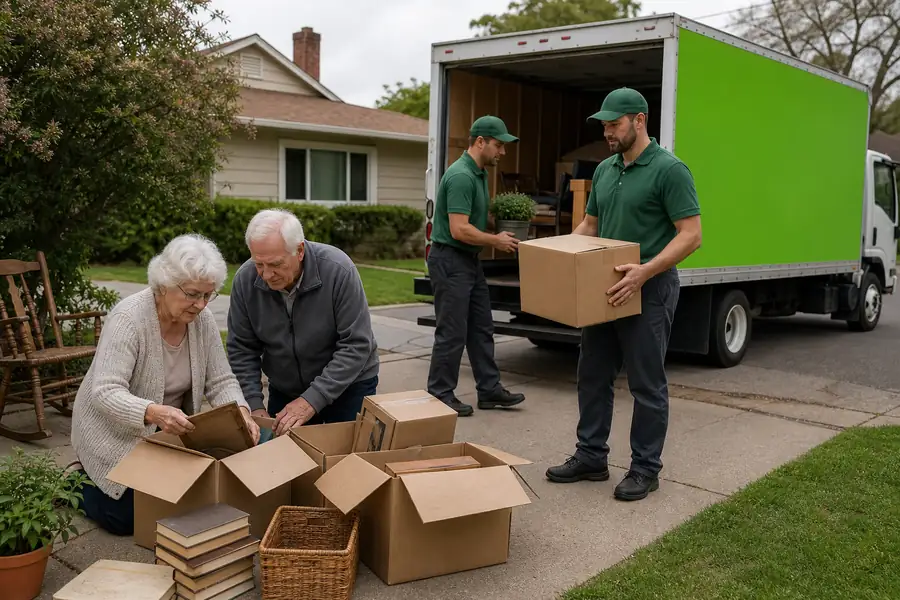
Most downsizing households end up using two or three disposal routes at once, because no single option fits every item. Furniture and housewares in good shape usually go to donation, higher-value antiques and collections often do better at an estate sale, and whatever's left over after both needs hauling out.
An estate sale makes sense when there's enough volume and resale value to justify hiring a company to run it, typically a full house of furniture, china, and collectibles rather than a single spare bedroom's worth of items. For smaller downsizing jobs, straight donation or a haul-away service covers it faster.
Families managing a larger, more complicated move sometimes bring in a senior move manager certified through the National Association of Senior Move Managers (NASMM). These specialists coordinate sorting, packing, floor planning, and the move itself, which helps when family members live out of town or the senior needs a gentler pace. AARP's caregiving resources are also a solid starting point for families navigating this process for the first time.
When the leftover volume is more than donation centers can take, Junk Rhinos' Estate Cleanout service clears out what's left after family members and donation pickups have taken their share, including furniture too worn for resale and the odds and ends that collect in every closet.
Pacing the Emotional Side of Downsizing for Seniors
Downsizing for seniors moves faster and feels less painful when the schedule includes real breaks, not just task deadlines. Sorting through 40 years of belongings in one exhausting weekend leads to rushed decisions and regret; spreading it across 3 months lets the emotional weight land in smaller, manageable doses.
Let the senior lead decisions about their own belongings whenever possible, even when it slows things down. A chair someone sat in every morning for twenty years deserves more conversation than a quick yes-or-no, and giving that conversation room tends to make the eventual decision easier to accept.
Schedule the heaviest, most sentimental rooms, usually the bedroom and any space full of photos or keepsakes, for the middle of the timeline rather than the first or last week. By the middle of month two, the family has momentum from easier rooms already finished, and there's still enough time left to sit with a hard decision instead of rushing it before moving day.
When the sorting is done and it's time to clear out what's left, Junk Rhinos' how it works page walks through exactly what a crew does on pickup day, from the walkthrough to the final sweep. A uniformed, licensed and insured crew handles the lifting and hauling so no one in the family has to carry a dresser down a flight of stairs. Getting a free on-site estimate before the move gives the family a firm price in writing, with no deposit and no surprises once the truck shows up.
Frequently asked questions
How long does downsizing for seniors usually take?
Most households need about 3 months to sort a full home without rushing emotional decisions, though a smaller apartment or condo can sometimes be done in 6 to 8 weeks. The right pace depends on how much sentimental sorting is involved, not just the square footage being cleared.
Starting with easier rooms, like the kitchen or garage, and saving bedrooms and keepsake-heavy spaces for the middle of the timeline tends to keep the whole project on schedule.
What is a senior move manager and do I need one?
A senior move manager is a professional, often certified through the National Association of Senior Move Managers (NASMM), who coordinates sorting, packing, floor planning, and move-day logistics for older adults. Families spread across different cities, or seniors who need extra patience and a gentler pace, tend to benefit the most from hiring one.
Smaller moves or families with time to manage the process themselves can often skip this step and handle the room-by-room plan directly.
What should happen to furniture and items no one in the family wants?
Items in good condition typically go to local donation centers, while higher-value antiques or full collections often do better through an estate sale. Whatever's left over after those two routes, including furniture too worn for resale, usually needs a haul-away service to clear it out.
This combination keeps usable goods out of the landfill while still getting the home cleared on schedule.
How do we decide who gets family heirlooms?
Ask each family member directly which specific pieces they genuinely want, rather than assuming based on who's closest or oldest. Setting a deadline, often two weeks, for claims keeps the decision from stalling the rest of the downsizing timeline while still giving everyone a fair chance to speak up.