Junk removal
Appliance Removal
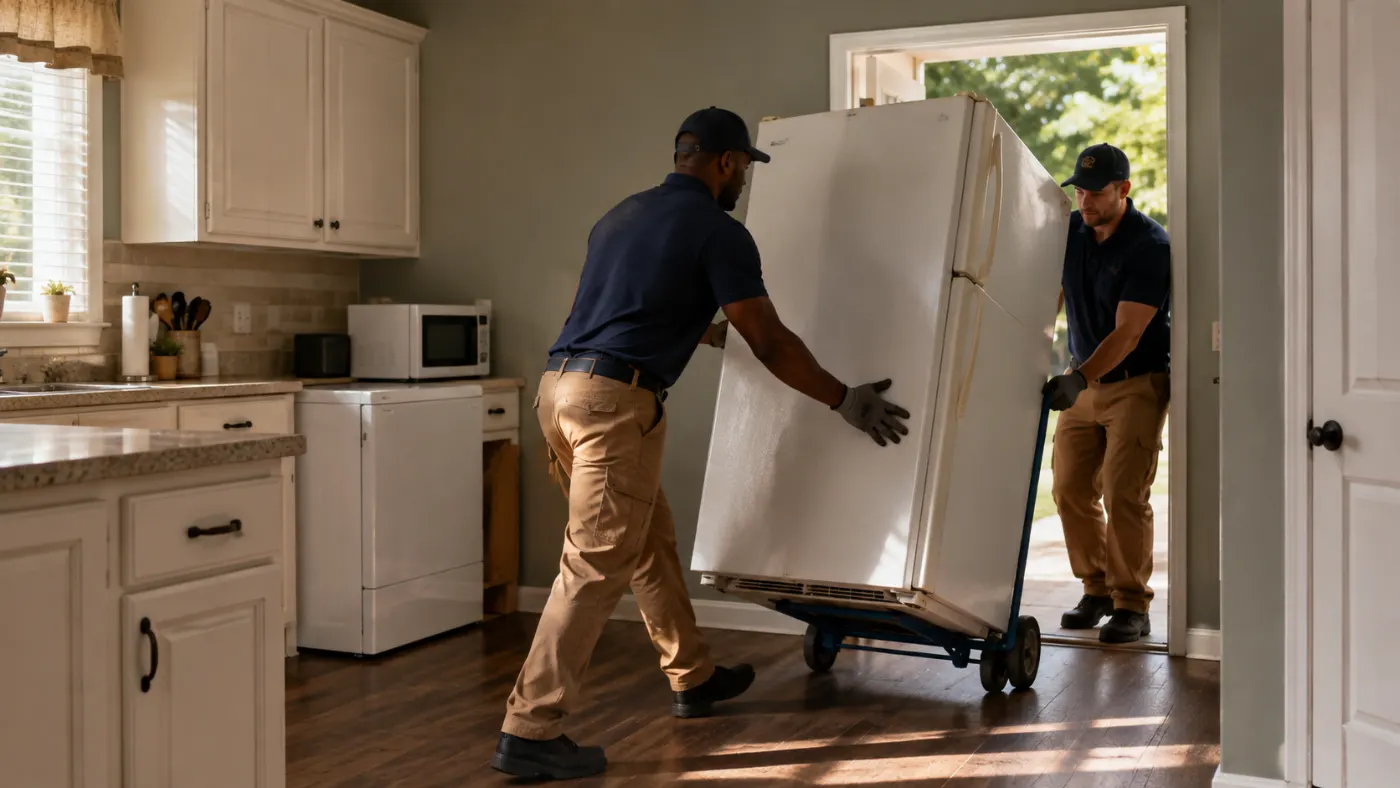
A dead refrigerator takes up space in two ways: the corner it occupies and the mental note to finally deal with it. Junk Rhinos removes old appliances from kitchens, laundry rooms, basements, and garages, handles the weight and the stairs, and routes each unit to a recycling facility where its metal and components are recovered. You get the corner back, and the fridge gets a more useful afterlife than a landfill.
- Insured, uniformed crews
- Free on-site estimate
- No deposit, no hidden fees
- Same or next-day in most areas
- We donate & recycle first
Appliances we take
Kitchen
Refrigerators, freezers, ranges, stoves, ovens, dishwashers, microwaves, and range hoods.
Laundry and utility
Washers, dryers, stacked units, water heaters, dehumidifiers, and window or portable AC units.
Everything else
Mini fridges, wine coolers, chest freezers, garbage disposals already removed from the sink, and old grills. One unit or a whole property's worth, including the mixed sets that come with estate cleanouts and rental turnovers.
Older units are welcome, including refrigerators with the doors still attached; we transport them properly for recycling.
Straight talk
Disconnection: who does what
Here is the honest division of labor. Before we arrive, appliances should be disconnected from their supply lines: water for washers and dishwashers, gas for gas ranges and dryers, and any hardwired electrical connections. Those hookups are plumber and electrician territory, and telling you otherwise would be doing you no favor. A standard plug-in unit is simpler: if it is just a cord in an outlet, the crew will unplug it and take it from there. From the moment the unit is free of its lines, everything is on us: the tipping, the dolly work, the stairs, the doorways, and the floor protection along the way.
When an appliance has to go
Appliances rarely leave on a schedule. They die mid-cycle, get replaced in a remodel, or sit in the garage for three years after their replacement arrived. The common versions of the job:
The store delivered the new one and left the old one
Many retailers deliver without haul-away, or charge for it and then skip it if the old unit is not already disconnected and sitting by the door. We pick up the unit wherever it ended up, the kitchen, the garage, or the porch where the delivery crew parked it.
Replaced during a kitchen or laundry upgrade
A remodel frees up a dishwasher, a range, a built-in microwave, sometimes the whole set at once. Once your plumber, electrician or installer has disconnected them, we take every unit in one trip. Swapping a gas range for induction follows the same rule: the gas line is capped by a licensed trade first, then the range is ours. Cabinets and countertops leaving too? That side is covered on our construction debris page.
The water heater the plumber left behind
Plumbers install the new tank and frequently leave the old one standing next to it. A drained, disconnected water heater is a routine carry for the crew, basement stairs included.
The second fridge in the garage
The spare fridge that holds four drinks and runs all year is one of the most common single-item pickups we do. Same for a chest freezer that quit. Empty it first, leave the doors on, and we handle transport to a facility equipped for refrigerant-bearing units.
A stacked washer and dryer in a tight closet
Stacked units in hallway closets are an access puzzle more than a weight problem. With the water, drain and any gas line disconnected, the crew unstacks where needed and works the pieces out without marking the door frame.
Several units across several rentals
Landlords replacing appliances across a building can have every old unit collected in one visit, which costs less than separate pickups because the units share the truck. For full unit turnovers, see property cleanouts.


Furnaces and heating oil tanks
Furnaces
When a furnace is replaced, the HVAC contractor disconnects the gas, the electrical and the venting. The old unit is then ours to carry out, basement stairs included, and its metal is recycled.
Heating oil tanks
We haul an oil tank once your licensed contractor has disconnected and drained it. We do not drain, clean or decommission tanks, and we do not dig up buried ones. Getting the empty tank out of the basement or the yard is our part.
Recycled, not dumped
Appliances are among the most recyclable things we haul. Steel shells, copper wiring, and aluminum components all have recovery value, and refrigerants in cooling units require proper handling at the facility level. We route appliances to facilities equipped for exactly that. It is better for the environment and it is also simply the law in most states, which prohibit landfilling refrigerant-bearing units.
How appliance removal works
Tell us the unit type and where it lives in the house (basement laundry rooms, we see you). You get a ballpark estimate.
Choose your window; same-day and next-day slots exist in most areas.
The crew confirms the firm price on arrival, free, before any work.
We haul it out, sweep the spot where it stood, and you pay once it is on the truck.
What does appliance removal cost?
Pricing follows truck space, and appliances are pleasantly predictable: a single unit occupies a known chunk of truck, so ballparks are accurate. Multiple units on one visit cost less than separate pickups, because they share the trip. The on-site price is all-in: labor, stairs, hauling, and recycling fees included. Details on the model are on our pricing page.
- Priced by the truck space your load fills
- Firm, all-in price confirmed free on-site
- No deposit, and nothing owed until it is done
- Labor, hauling and disposal fees all included
Frequently asked questions
Do you take refrigerators with food still inside?
Please empty it first; that is the one thing we ask. Doors can stay on, and we handle safe transport for recycling.
Can you remove an appliance from a basement or upstairs?
Yes. Stairs are standard work for our crews, with straps and dollies for the heavy units, and protection for your walls and railings on the way up.
Do I need a plumber before you come?
Only if the unit is connected to water or gas. Washers, dishwashers, and gas appliances should have their lines disconnected before pickup. Plug-in units need nothing but an empty path.
Who offers same-day appliance removal?
We do, in most areas, along with next-day service. Mention the appliance type when you call so the right equipment is on the truck.
Are old appliances really recycled?
Yes. The steel, copper, and aluminum in an average appliance are valuable enough that recycling is the standard route, and refrigerant-bearing units legally require it. We take them to facilities set up for exactly this.
Can you take a water heater or an AC unit?
Yes to both, once they are disconnected from their plumbing or mounting. They ride the same truck-space pricing as everything else.
The store would not haul away my old appliance. Can you take it?
Yes, that is one of the most common reasons people call. We pick up from inside the home, the garage or wherever the unit was left, and route it to recycling.
Do you take old grills?
Yes. Remove the propane tank first: tanks fall under our hazardous materials exclusion, and most propane exchange points or local hazardous waste programs accept them.
Can you collect appliances from several rental units in one visit?
Yes. Tell us the unit count and access details when you request the estimate. Multiple appliances on one visit cost less than separate pickups because they share the trip.
Do you remove old furnaces and heating oil tanks?
Yes, once a licensed contractor has disconnected them. For an oil tank, that contractor also drains it. We haul the empty tank, but we do not decommission tanks ourselves.
Ready when you are
Reclaim the corner. Call (877) 283-1595 or request a free estimate online, and the old appliance is gone as soon as today in most areas.