Jump to section
Cleaning out a house after a death is one of the heaviest tasks a grieving family faces, and it's rarely just about the stuff. Every drawer holds a decision, and every decision competes with grief that doesn't wait for a convenient time. The job gets easier once you know the right order: paperwork first, siblings looped in early, then a simple system for sorting everything else. Here's how to clean out a parent's house without losing what matters or burning out before the last box is packed.
Key takeaways
- Secure documents, deeds, and valuables before sorting furniture or clothing.
- Bring siblings and heirs into the plan early to avoid disputes later.
- Sort room by room using four piles: keep, sell or donate, family claims, and trash.
- Estate sales suit houses full of furniture and collectibles; donation moves faster for everyday goods.
- A cleanout crew clears what's left once sorting decisions are made, usually in a single day.
Start With Documents and Valuables Before Anything Else
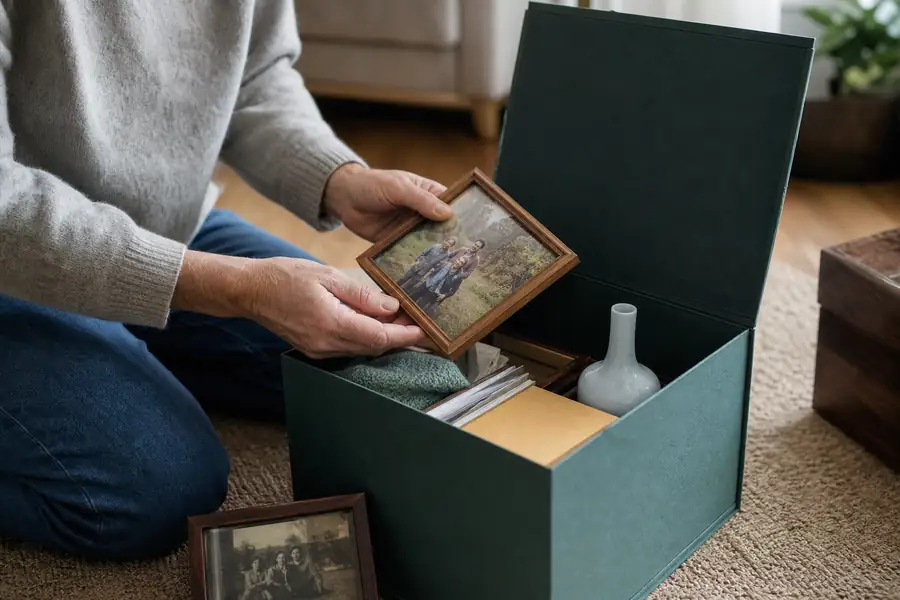
Paperwork and valuables come out of the house before anything else gets touched, because they're the pieces you can't replace and the ones probate depends on. Look for the will, property deeds, life insurance policies, bank and investment statements, and the title to the car. Jewelry, cash, firearms, and small collectibles should leave the house the same day, not sit in a home that will stand empty for weeks.
According to AARP guidance, families handling a parent's estate should locate financial and legal documents before disposing of any belongings, since some records affect taxes, benefits, or the probate process. Set aside a single box or folder labeled "keep near me" for anything official-looking, even if you're not sure yet what it is. For a full room-by-room breakdown of what to save, our estate cleanout checklist covers it in more detail.
Involve Siblings and Family Early, Before Sorting Begins
Cleaning out a parent's house goes smoother when everyone with a stake in the estate agrees on ground rules before the first box gets packed. Disagreements almost always happen over sentimental items, not big-ticket furniture, so it helps to walk through the house together early and flag anything more than one person wants.
Pick one person as the point of contact for scheduling, even if several siblings share the physical work. That person tracks what's been sorted, what's still pending, and what needs a family vote. Decision fatigue sets in fast during a deceased estate cleanout, and one clear coordinator keeps small disagreements from turning into bigger ones.
The 4-Pile Method for Sorting a Deceased Estate
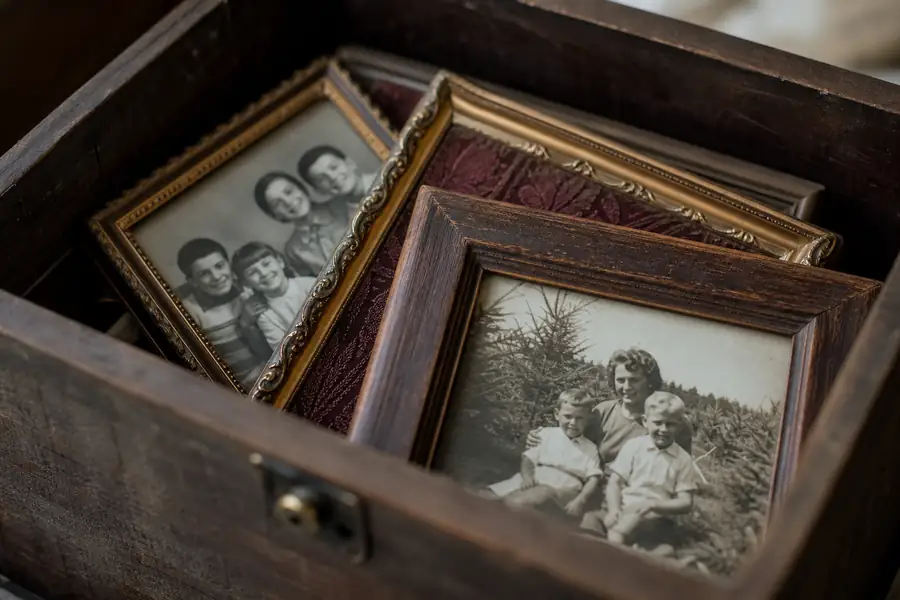
The 4-pile method breaks an overwhelming house into four simple decisions, made once per item instead of debated over and over. Work one room at a time and sort everything into keep, sell or donate, family claims, or trash.
| Pile | What Goes Here | Where It Ends Up |
|---|---|---|
| Keep | Photos, jewelry, documents, a few heirlooms | Goes home with you |
| Sell/Donate | Furniture, dishes, tools, clothing in good shape | Estate sale or donation center |
| Family Claims | Items more than one relative wants | Set aside for a family decision |
| Trash/Haul | Broken, expired, or unsellable items | Landfill or recycling, hauled out |
Label boxes with painter's tape as you go so piles don't get mixed between rooms. Most families find the trash and donate piles grow fastest, since a house lived in for decades holds far more than anyone remembers keeping.
Handling Sentimental Items Without the Guilt
You don't have to keep an item to honor what it meant. Grief attaches itself to objects fast, which makes it tempting to keep far more than you have room for or will ever use.
A practical rule that helps most families: photograph anything you're on the fence about, then let the physical object go if space or storage is genuinely tight. Keep a small number of pieces that carry real weight, a watch, a set of dishes, a chair, rather than trying to preserve an entire room as a shrine. Spread meaningful items among grandchildren and other relatives when it fits; a home split several ways carries a parent's memory further than one closet ever could.
Estate Sale vs Donation: Which Fits a Deceased Estate Cleanout
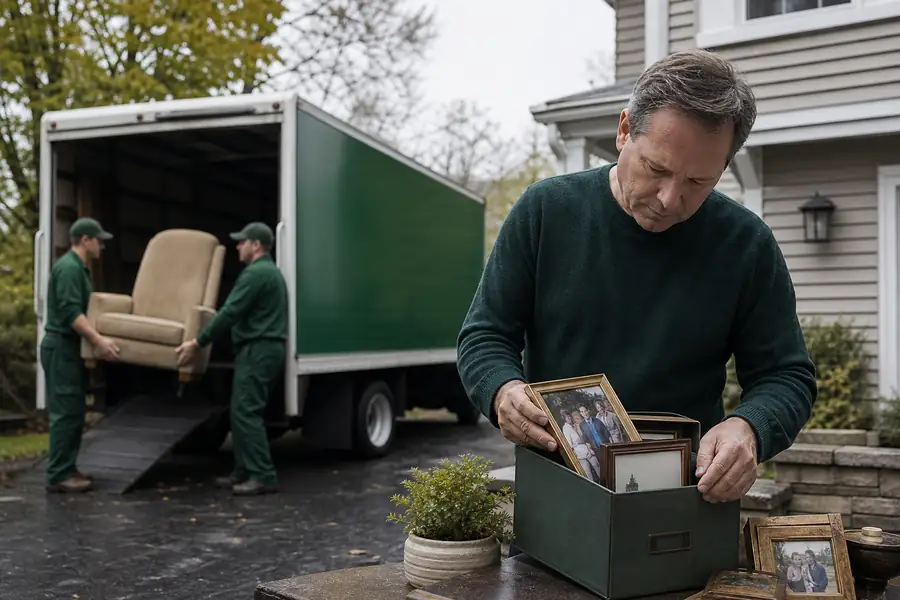
An estate sale makes sense when a house holds enough furniture, antiques, or collectibles to sell as a lot, usually two or more full rooms of higher-value goods. Estate sale companies typically take a percentage of what sells, often 30 to 40 percent, and need one to two weeks to price, stage, and run the sale.
Donation moves faster and costs less effort when the goal is simply clearing the house rather than maximizing sale proceeds. Many charities offer free pickup for furniture in usable condition, and our guide on how to donate furniture for free pickup walks through which organizations take what. For most families cleaning out a parent's house on a deadline, whether an executor's timeline or a house going on the market, donation combined with a cleanout for the rest gets the job done in days instead of weeks.
When to Call a Cleanout Crew
Call a cleanout crew once the sorting decisions are made and only the sell, donate, and haul piles are left standing. That's the point where the emotional work is done and the physical work, hauling heavy furniture down stairs, loading a truck, sweeping up afterward, becomes the bottleneck.
Junk Rhinos' Estate Cleanout service exists for exactly this moment: a uniformed crew clears out what's left, drops off donations, and hauls the rest for recycling or proper disposal, so no family member has to lift a mattress or a china cabinet down a staircase. Pricing runs by volume, meaning you pay for the space your items take up in the truck, not a flat whole-house number that punishes a lightly furnished home. You can see exactly how a job gets scheduled and quoted on our how it works page, and every estimate is confirmed on-site in writing before any work starts, no deposit required. If you're ready to see what your parent's house would run, request a free estimate and a crew can typically be out within a day or two.
Frequently asked questions
How long does it take to clean out a parent's house after death?
Most families spend two to six weeks sorting a full house, depending on how much needs to go through probate and how many people are involved in the decisions. The physical hauling, once sorting is finished, usually takes a crew a single day for an average-sized home.
Do I need to clean out the house before selling it?
Yes, in almost every case, since buyers and real estate agents expect a home to show empty or nearly empty. Selling on an executor's deadline is one of the most common reasons families call a cleanout crew rather than sorting everything solo.
What should I do with a deceased parent's clothes?
Clothing in good condition usually goes to donation centers, shelters, or clothing recycling programs rather than the trash. Keep only a handful of sentimental pieces, like a favorite sweater or a wedding dress, and consider having a few items made into keepsakes such as a quilt.
Can I hire someone to clean out a house after a death?
Yes, junk removal and estate cleanout companies handle the hauling and disposal once a family has made the keep, sell, and donate decisions. Some crews will also help separate obvious trash from usable goods on-site if a family hasn't fully sorted yet.
How much does a deceased estate cleanout cost?
Cost depends on how much needs to be hauled out, since most companies price by the volume of junk removed rather than a flat per-house fee. Getting a free on-site estimate is the most reliable way to know a real number for a specific house.