Jump to section
A busted laptop or a drawer full of dead phone chargers looks like ordinary trash, but it's actually one of the most regulated categories of junk in the country. Electronics recycling isn't just a nice-to-do gesture: in dozens of states it's required by law, and tossing the wrong device in a landfill can leach lead and mercury into soil for decades. This guide covers what counts as e-waste, why it needs special handling, and how to get rid of it for free in most areas.
Key takeaways
- E-waste is anything with a circuit board, battery, or power cord that's reached the end of its life.
- Heavy metals like lead, mercury, and cadmium leach out of electronics once they're buried in a landfill.
- The list of what counts is longer than most people think: smoke detectors, vapes, and holiday lights all qualify.
- State e-waste recycling laws vary widely, and some states ban electronics from landfills outright.
- Most everyday items can be recycled for free through retailers, manufacturers, or local collection events.
- Wiping your data matters even when a device is headed to a certified recycler.
What Is E-Waste?
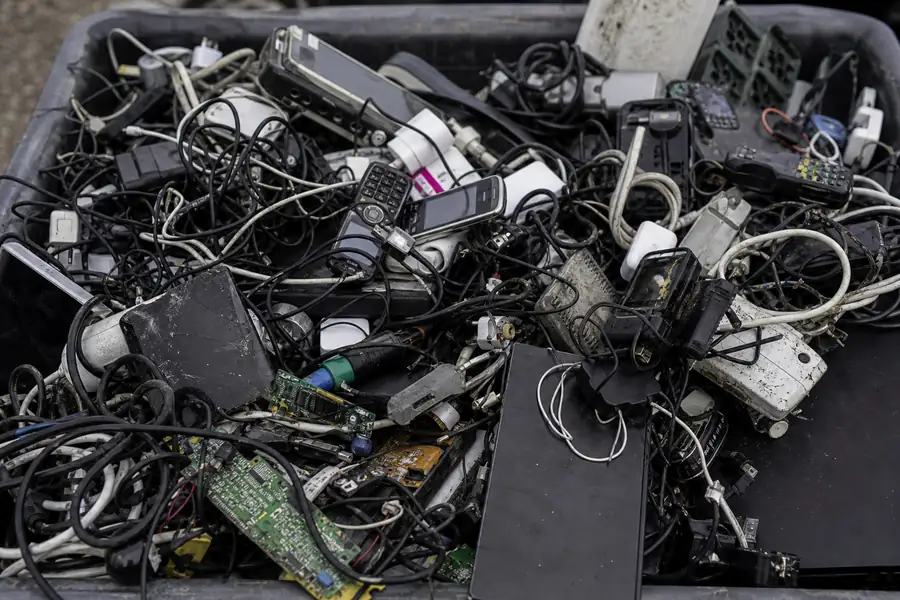
E-waste, short for electronic waste, is any device with a circuit board, battery, or power cord that has reached the end of its useful life. That covers everything from laptops and televisions to the string of smart lights you plugged in over the holidays. The category exists because electronics contain a mix of valuable metals and hazardous materials that ordinary trash and curbside recycling streams aren't built to handle. Electronics recycling separates those materials so the useful ones get reused and the toxic ones get contained instead of buried.
Why E-Waste Can't Go in the Trash
E-waste can't go in the regular trash because it contains heavy metals that leach into soil and groundwater once a landfill liner breaks down. Older TVs and computer monitors hold several pounds of lead apiece. Flat screens and certain light fixtures use mercury. Rechargeable batteries pack cadmium and lithium, which can spark landfill fires when a compactor crushes them. The EPA has flagged electronics as one of the fastest-growing categories of municipal waste, estimating that Americans generate several million tons of e-waste every year, with most of it never reaching a certified recycler. That gap is exactly what e-waste recycling programs exist to close.
What Counts as E-Waste? The Surprising List
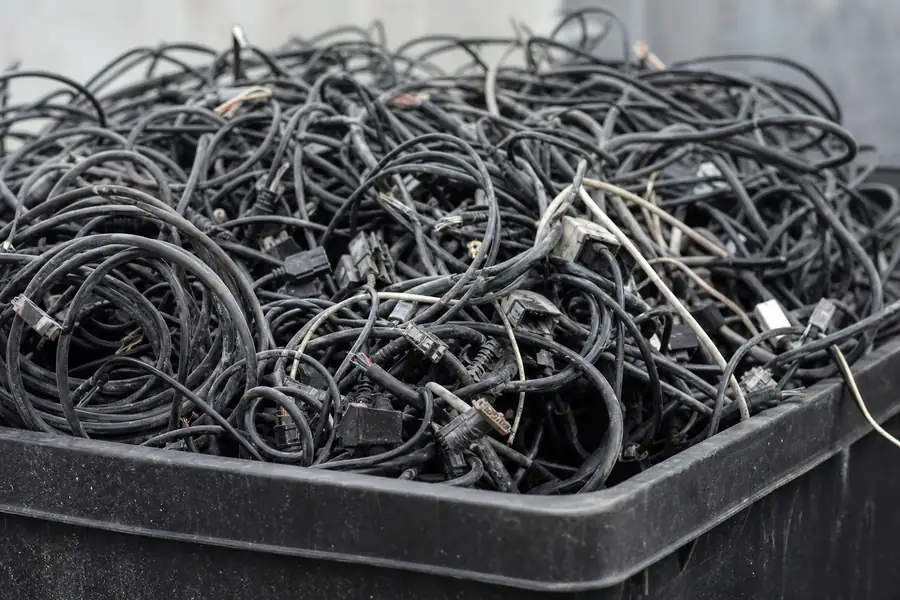
E-waste covers far more than computers and TVs. If it plugs in, runs on a battery, or holds a circuit board, it almost certainly counts for e-waste recycling, and the full list includes some items people don't expect. Laptops, TVs, and smartphones make up the bulk of what crews collect, but small appliances, light fixtures, and anything with a lithium battery belong in the same category. We cover item-specific steps in separate guides on how to dispose of an old laptop and how to dispose of a TV.
| Item | Where It Goes |
|---|---|
| TVs & monitors | Certified e-waste recycler |
| Laptops & desktops | Manufacturer take-back or certified recycler |
| Smartphones & tablets | Carrier trade-in or retailer take-back |
| Rechargeable batteries | Battery recycling bin at retailer |
| Smoke detectors | Manufacturer mail-back (contains americium) |
| Vapes & e-cigarettes | Certified e-waste recycler, never the trash |
| Small kitchen appliances | Appliance recycler or e-waste drop-off |
| Printers, cables, chargers | Certified e-waste recycler |
Do E-Waste Recycling Laws Vary by State?
Yes, e-waste recycling laws vary widely by state, which is the main reason the rules feel confusing. More than half the states have passed some form of electronics recycling legislation, and a number of them, including California, New York, and Washington, ban TVs, monitors, and computers from landfills outright. Other states leave e-waste recycling to voluntary manufacturer and retailer programs with no mandate at all. Before assuming a landfill ban doesn't apply to you, check with your local waste authority, since many cities enforce rules stricter than their state's.
Free E-Waste Recycling Channels
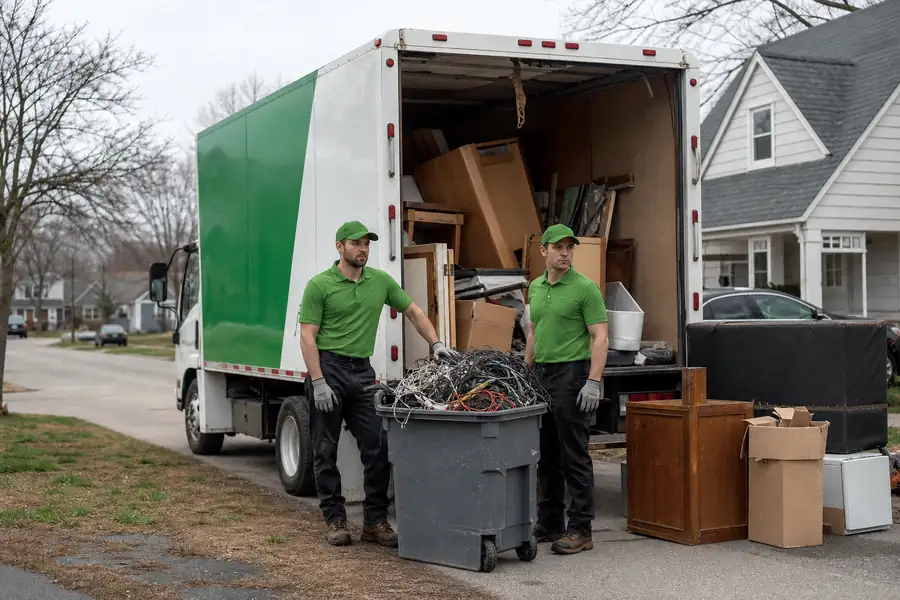
Most people can recycle electronics for free through a handful of channels. Retailers like Best Buy and Staples take back laptops, phones, and small electronics year-round at no charge. Manufacturers such as Apple, Dell, and HP run mail-back programs for their own products. Many cities also hold periodic e-waste collection events, and some counties keep a permanent drop-off site at the local transfer station.
For bulk loads, like an office swap-out, an estate cleanout, or a garage full of dead electronics, dragging items to a drop-off one at a time stops making sense. Junk Rhinos' Electronics & E-Waste Recycling service picks up everything at once, confirms a firm price on-site before any work starts, and routes usable electronics to recyclers instead of a landfill. Request a free estimate online and skip the trunk full of chargers you've been meaning to drop off.
Data Safety Basics Before You Recycle
Wipe your data before any device leaves your hands, even when it's headed to a certified recycler. Factory reset phones and tablets, and remove SIM and memory cards first. On computers, run a secure-erase tool or pull the hard drive if the data is sensitive, since a standard delete doesn't actually remove the files. Certified e-waste recyclers can also provide a certificate of data destruction for drives they shred on-site, worth asking for when you're clearing out a business or an estate.
Frequently asked questions
What is e-waste, exactly?
E-waste is any electronic device that has reached the end of its useful life, including anything with a circuit board, battery, or power cord. Common examples are computers, TVs, phones, printers, and small appliances, but the category also covers things like smoke detectors and vapes.
Can e-waste go in my regular recycling bin?
No. Curbside recycling bins aren't equipped to separate the hazardous materials found in electronics, and mixing e-waste into regular recycling can contaminate the whole load. E-waste needs to go to a dedicated electronics recycler, a retailer take-back program, or a pickup service built for it.
Is e-waste recycling free?
In most areas, yes. Retailers, manufacturers, and local collection events typically accept everyday electronics like phones and laptops at no charge. Bulk pickups for large quantities, such as an office cleanout, usually carry a cost based on volume, which is where a quote from a hauling service comes in handy.
What happens to electronics after they're recycled?
Certified recyclers break devices down to separate metals, plastics, and glass for reuse, while hazardous components like batteries and circuit boards get processed separately to keep lead, mercury, and cadmium out of landfills. Usable devices are sometimes refurbished and resold or donated instead of being broken down at all.
Do I need to remove my data before recycling a computer?
Yes. Deleting files or doing a standard factory reset doesn't fully erase a hard drive, so sensitive information can often still be recovered. Use a secure-erase tool, physically remove the drive, or ask your recycler for a certificate of data destruction if you're disposing of a computer with private information on it.