Quick answer
A full attic cleanout usually takes one weekend if you plan it in stages: clear a staging area, pull everything down, sort into keep, sell, donate, and trash piles, then haul out what's left. The parts that slow people down are heat, insulation dust, and getting heavy items down a narrow pull-down stair, which is exactly where attic cleanout services earn their keep.
Jump to section
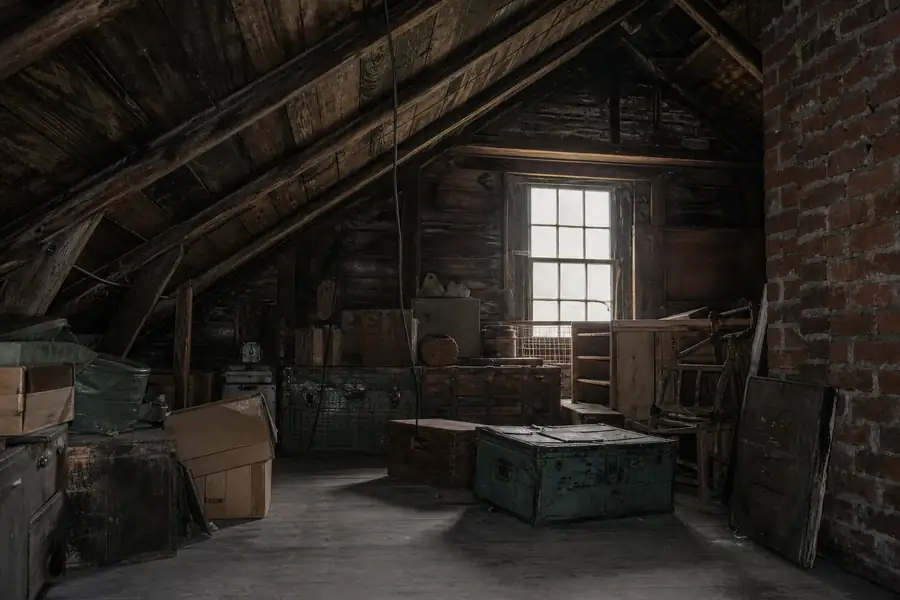
Attics collect decades of stuff nobody wants to deal with: holiday decorations from three Christmases ago, a crib nobody needed after kid number two, boxes from a move that never got unpacked. Clearing it out is simple in theory and genuinely hard in practice, because the space itself works against you. This guide walks through doing an attic cleanout safely, in order, from the first box to the last trip down the ladder.
Key takeaways
- Attics carry heat, insulation, and footing hazards that other rooms don't
- A weekend attic cleanout works best broken into clear and sort, then inspect and haul
- Vintage furniture, toys, tools, and holiday decor are often worth selling, not tossing
- Check every box for pest droppings and water stains before it goes into your living space
- Tight stairs and low clearance make hauling the hardest part, and attic junk removal crews are built for exactly that
- A free on-site estimate locks your price in before anyone starts moving boxes
Why an Attic Cleanout Starts With Safety
Attic cleanouts carry three hazards you won't run into clearing a bedroom or garage: heat, insulation, and weak footing. An unvented attic can hit 120 to 150 degrees on a warm afternoon, so work early or late in the day and take water breaks seriously.
Fiberglass insulation sheds fine particles that irritate skin, eyes, and lungs, so wear gloves, long sleeves, and a dust mask or respirator rather than just a bandana. Never compress or kneel directly on insulation to get a better reach, and never run tools near recessed lighting or wiring without knowing the circuit is off.
Footing is the one people underestimate most. Attic floors are usually exposed joists, the horizontal framing beams that hold the ceiling below, with insulation laid between them and no solid surface underneath.
Step between joists or balance on a board laid across them and you can put a foot straight through the ceiling drywall. Lay down plywood scraps or a sheet of OSB as a temporary walkway if you'll be up there for more than a few minutes at a time.
Your Weekend Attic Cleanout Plan
Splitting an attic cleanout across a Saturday and Sunday keeps the job from stalling halfway through. Here's the order that works for most attics, whether it's a small crawl space or a full walk-up.
- Clear a staging area in a hallway or spare room below the attic access
- Pull every box and item down one at a time, don't shuffle things around up there first
- Sort as things come down into four piles: keep, sell or donate, recycle, trash
- Inspect anything questionable for pests or water damage before it joins the keep pile
- Load the trash and donation piles for haul-away, then sweep and vacuum the attic floor
Pack a kit before you start climbing: headlamp, dust mask or respirator, work gloves, knee pads, a flashlight for dark corners, tarps or moving blankets to protect stairs and floors, and a stack of flattened boxes or bins for the keep pile. Most homeowners find the pulling-down and sorting take the bulk of a Saturday, leaving Sunday for inspection and hauling.
Sorting Decades of Attic Storage: What to Keep, Sell, or Toss
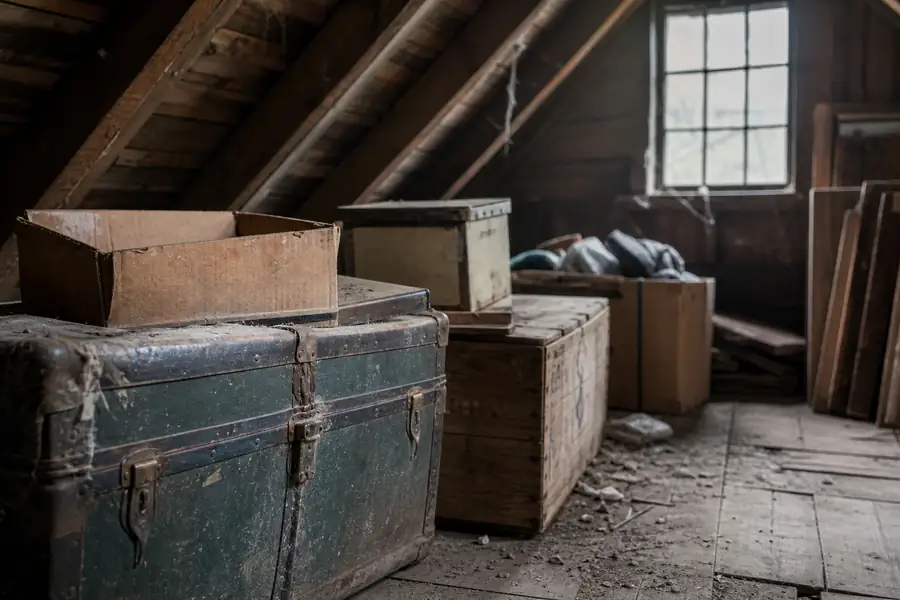
Most attics hold three kinds of storage: things that still matter, things that are worth real money, and things that are just taking up space. Vintage furniture, old toys, tools, vinyl records, and pre-1980s holiday decor often sell well online or at a consignment shop, so it's worth a quick search before anything hits the curb.
Photos, documents, and family heirlooms obviously stay in the keep pile. For everything else, a clear framework for what to sell, donate, or let go of saves hours of second-guessing, and our guide on deciding whether to sell or donate old furniture walks through the same questions for whatever comes down from your attic.
Be realistic about condition. A dresser with water rings or a box of kids' toys with faded colors from heat exposure usually isn't worth listing, no matter how nice it once was. That stuff goes straight to the trash or recycle pile instead of sitting around waiting for a buyer who isn't coming.
Checking Attic Storage for Pest and Water Damage
Any box that's been sealed in an attic for years needs a quick inspection before it comes into your house. Mice and squirrels nest in insulation and cardboard, leaving droppings, chewed corners, and a sharp smell that tells you everything you need to know.
Water stains on the underside of boxes or along the roofline point to a leak, even an old one that's since been fixed. Mold spreads through cardboard and fabric fast in attic heat, so a musty smell or dark speckling on a box means it goes in the trash pile, not the keep pile, no matter what's inside.
This kind of damage check isn't unique to attics. The same rules apply to anything pulled out of a basement cleanout, since both spaces trap moisture and pests in ways living areas don't.
Hauling Attic Junk Out of Tight Spaces
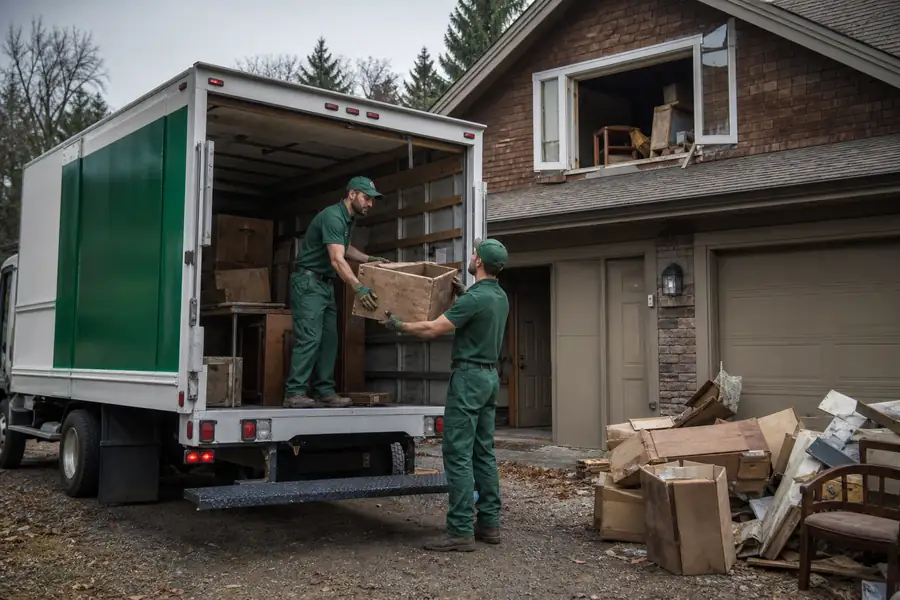
Attic junk removal is almost always the hardest part of the job, not because the items are unusual but because the access is. Pull-down ladders are narrow, steep, and rated for a lot less weight than a loaded storage tote, so moving a disassembled crib or a trunk full of books down one safely takes two people, not one.
Low clearance near the hatch means furniture has to come apart or come down at odd angles, and a single wrong step risks the ladder itself or the ceiling around it. This is the point where most DIY cleanouts stall out: everything's sorted, but getting the trash and donation piles out of the house is slow, awkward, and hard on your back.
Crews that handle General Junk Removal every week bring the right straps, dollies, and extra hands to clear an attic in a fraction of the time it takes solo. Junk Rhinos prices attic cleanouts by how much space your junk takes up in the truck, not by guesswork, and confirms that price on-site before anyone starts hauling. You can get a sense of your own job by requesting a free estimate, with no deposit required and nothing added after the fact. If you would rather hand the whole job over, our attic cleanout services clear it from the hatch to the truck.
Frequently asked questions
How much does an attic cleanout cost?
Attic cleanout costs usually depend on how much volume the junk takes up in a truck, not just the number of items. Most attic cleanouts run smaller than a full basement or garage job since the space itself is limited, but a free on-site estimate is the only way to get an exact number for your attic.
Can I throw old insulation away myself?
Small amounts of fiberglass insulation can go out with regular trash in most areas if it's bagged and sealed, but check local rules first since some municipalities treat it as construction debris. If you're replacing insulation during a larger renovation, a hauling crew can remove larger volumes along with everything else coming out of the attic.
What should I do if I find pest damage in attic storage?
Isolate anything with droppings, chewed cardboard, or a strong odor and bag it before carrying it through the house, since pests and debris can spread to living areas. If the damage looks extensive or you see signs of an active infestation, it's worth having pest control inspect the attic before you finish the cleanout.
Is it worth selling items found in an attic cleanout?
Vintage furniture, tools, toys, and holiday decor in good condition often sell well online or through a consignment shop, so it's worth a quick check before anything goes to the curb. Items with water damage, mold, or heat warping usually aren't worth listing and are better sent straight to the trash or recycle pile.