Quick answer
You can't just set a TV out with the regular trash in most of the country. To dispose of a TV, drop it off at a free electronics recycling location like Best Buy or a manufacturer take-back program, donate it if it still powers on and the screen is intact, or schedule a pickup with a junk removal crew for TVs that are dead, cracked, or too heavy to carry to the car.
Jump to section
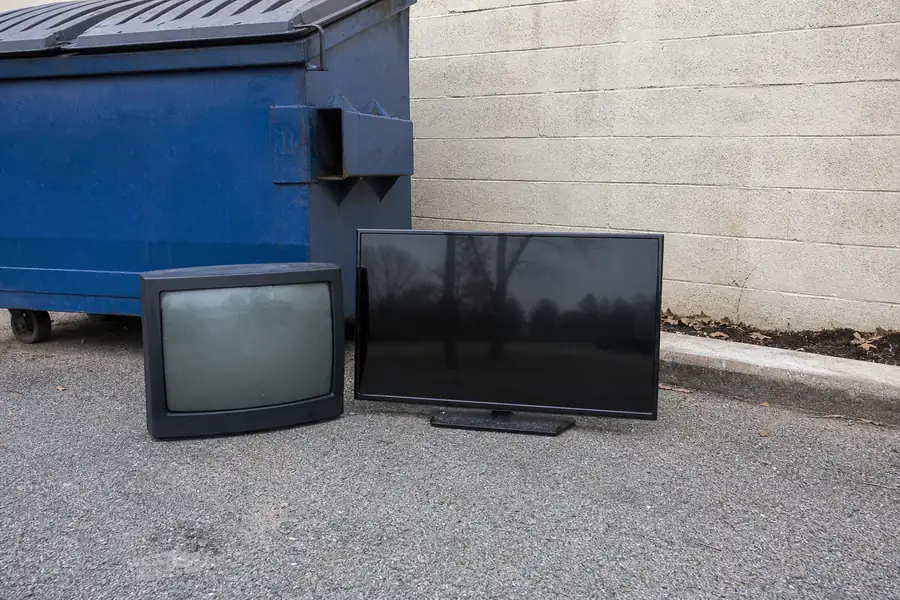
Old CRT sets can weigh 50 to 100 pounds or more and are packed with leaded glass. Flat screens are lighter but still count as electronic waste. Which disposal route makes sense depends on whether the TV works, how old it is, and how much you can lift.
Why You Can't Just Throw a TV in the Trash
Most trash haulers won't take a TV at the curb, and in many states it's actually illegal to put one in the landfill-bound trash at all. TVs count as e-waste, short for electronic waste: discarded devices with circuit boards, glass, and metals that can leach into soil and groundwater as they break down in a landfill.
A CRT tube can contain several pounds of leaded glass. Flat screens carry mercury in older backlights, along with cadmium and flame retardants in the plastic housing. That combination is exactly why so many states regulate how a TV gets disposed of.
More than half of U.S. states, including California and New York, have e-waste laws that ban TVs and monitors from household trash and landfills, and some enforce fines for curbside dumping. Check your state or local waste authority before you set one on the curb.
CRT vs Flat Screen TVs: Why the Disposal Method Differs
CRT TVs (the Old Boxy Sets)
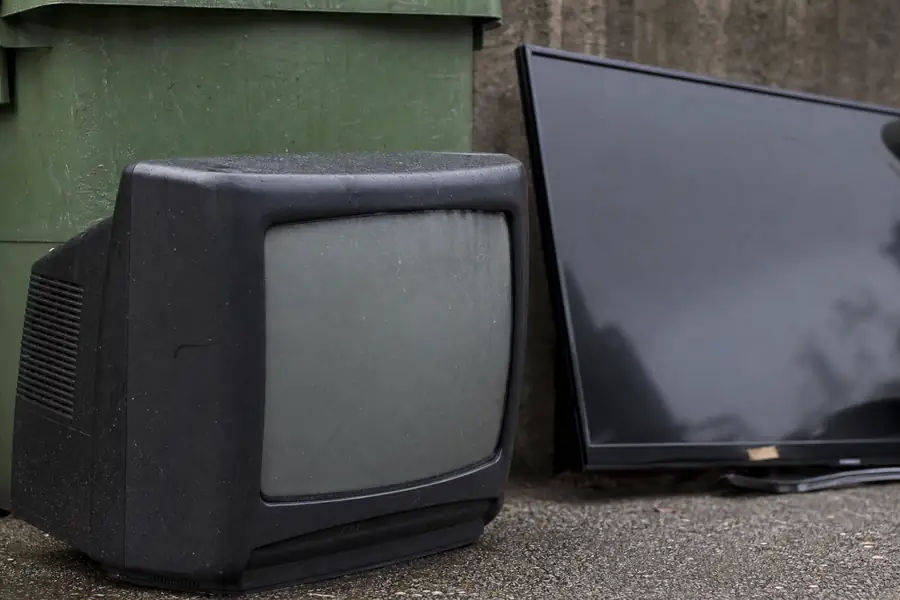
CRT televisions are the heaviest and hardest to recycle because the glass tube has to be processed separately from the plastic housing and circuit board. Many recycling centers charge a fee for CRTs specifically, and most thrift stores stopped accepting them years ago since almost nobody wants a 27-inch tube set anymore.
Flat Screens (LCD, LED, Plasma, OLED)
Flat screen TVs are lighter and easier to move, which makes free drop-off recycling and donation far more realistic. They still qualify as e-waste, though, so they belong in a proper recycling stream rather than the trash, even if the screen still lights up.
Free Ways to Recycle a TV Near You
The fastest free option to dispose of a TV is a retailer take-back program. Best Buy accepts most televisions for free recycling at store drop-off, though very large or oversized screens sometimes carry a small handling fee. Manufacturers like Samsung, LG, and Sony also run their own take-back programs for their brand's electronics.
If you're searching "tv recycling near me" and coming up short, check your city or county's household hazardous waste program, since many municipalities host periodic e-waste collection events. For a household with more than just a TV to get rid of (old monitors, computers, cables, printers), Electronics & E-Waste Recycling from Junk Rhinos picks up everything at once and routes it to certified recyclers, so you're not making three separate trips.
Donating a Working TV
A TV can be donated only if it powers on, the screen has no cracks or dead pixels, and ideally the remote is included. Goodwill, Habitat for Humanity ReStore, and local shelters generally accept flat screens in working condition but will turn away CRTs and older sets that are hard to resell.
Test the TV before you load it up. A donation center has to test it anyway, and a set that fails inspection just gets thrown away on their end, which defeats the purpose of donating it in the first place.
The Easiest Way to Get Rid of an Old TV That Doesn't Work
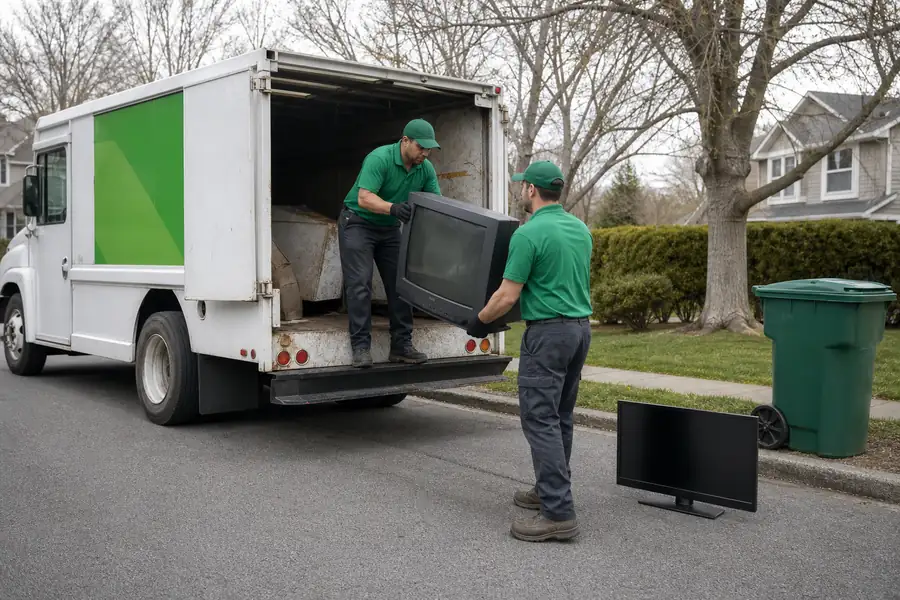
When a TV is broken, cracked, ancient, or simply too heavy to wrestle down a flight of stairs, the easiest way to get rid of an old TV is to have someone else haul it. Junk Rhinos will send a uniformed crew to pick it up, whether it's one dead flat screen in a spare room or a garage full of old electronics from a cleanout.
Junk Rhinos prices by volume, meaning you pay for the space the TV and anything else takes up in the truck, not a flat per-item fee. You can see typical pricing ranges before you even call, then Junk Rhinos confirms that number on-site before any work starts, with no deposit required. Get a free estimate and same or next-day pickup is usually available.
Frequently asked questions
Can I put a TV in the regular trash?
In most cases, no. Many states have e-waste laws that ban TVs from household trash and landfills, and most trash haulers refuse to pick up TVs at the curb even where it's technically legal. Recycling, donation, or a pickup service are the standard routes.
How much does it cost to dispose of a TV?
Drop-off recycling through a retailer or manufacturer program is usually free for a standard TV. If you'd rather have it picked up, junk removal pricing depends on the size of the TV and whether other items are being hauled at the same time, so requesting a free on-site estimate is the best way to get an exact number.
Does Best Buy really recycle TVs for free?
Yes, Best Buy accepts most televisions for free recycling at store drop-off locations, though extremely large screens sometimes carry a small fee. It's worth calling your local store first to confirm size limits before you load one into the car.
Can I recycle a broken flat screen TV?
Yes, a broken flat screen still counts as e-waste and can go through the same recycling channels as a working one, it just can't be donated. Retailer drop-off programs, municipal e-waste events, and junk removal pickup all accept broken flat screens.
What happens to TVs after they're recycled?
Recyclers break TVs down into glass, plastic, and metal components, which get separated and sold as raw material for new products. Certified e-waste recyclers also handle the hazardous parts, like leaded glass and mercury backlights, so they don't end up in a landfill.