Jump to section
A hoarding cleanout is rarely just about the stuff. It's about a family member who feels overwhelmed, embarrassed, or unable to let go, and a home that's stopped feeling livable. Done right, a hoarding cleanup moves at the person's pace, protects their dignity, and still gets the space back to safe and functional. This guide walks through the whole process: the first conversation, the sorting system, the safety issues, and when it's time to bring in help.
Key takeaways
- Start with one calm, private conversation, not an ultimatum
- Plan the cleanout in phases; a single weekend rarely works
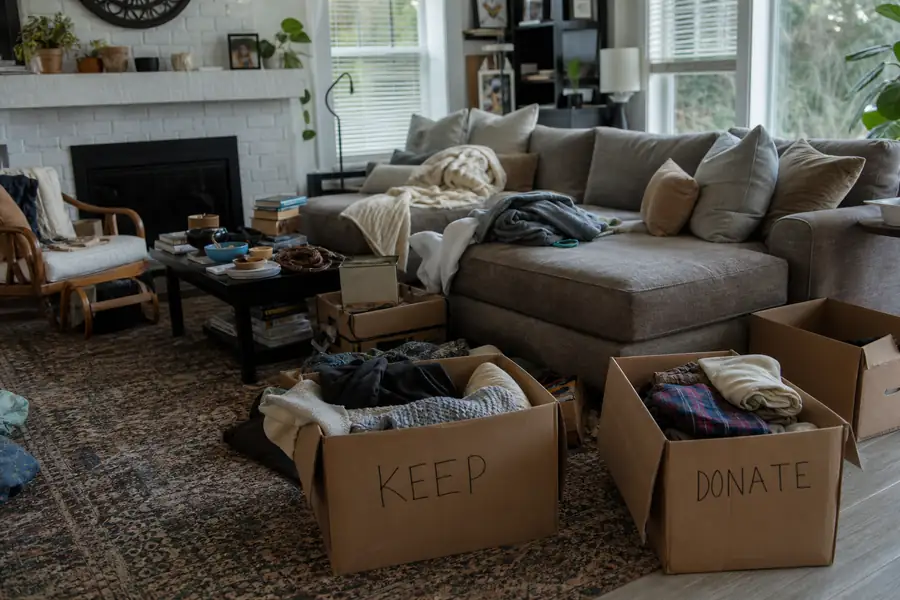
- Sort into four categories: keep, donate, recycle, dispose
- Check for structural, fire, and health hazards before anyone moves items
- Bring in hoarder cleanout services for large volume, unsafe conditions, or stalled progress
- Aftercare, not just the cleanout, decides whether the change lasts
Starting the Conversation About a Hoarding Cleanout
The first conversation about a hoarding cleanout works best when it happens privately, calmly, and away from an audience. Pick a quiet moment, not a moment of crisis (a fall, a code violation notice, a holiday gathering gone wrong), and lead with concern for the person, not the mess.
The International OCD Foundation, a leading clinical authority on hoarding disorder, describes it as a recognized mental health condition tied to difficulty discarding possessions and often paired with real distress at the thought of losing them. That framing matters. A hoarding cleanup that opens with blame tends to stall before it starts; one that opens with patience and a shared goal tends to move forward.
Ask what worries them about the home, not what they're doing wrong. Offer to help build a plan, not to fix everything overnight. Expect that first talk to settle intentions and timeline, not boxes.
Planning a Hoarding Cleanout: What to Decide First
A hoarding cleanout goes smoother when the family agrees on scope, pace, and roles before anyone touches a box. Decide which rooms come first, usually the ones blocking exits, plumbing, or a bed, how many sessions the work will take, and who is allowed in the home while it's happening.
Most families do better spreading a hoarding cleanup across several shorter sessions instead of one exhausting weekend. Shorter sessions keep the person with lived experience from feeling steamrolled, and they give everyone room to process decisions instead of making dozens of them per hour.
Set one simple goal per session: clear a room, a hallway, an exit path. Small, finished wins build trust for the next round.

A Step-by-Step Sorting System for Hoarding Cleanup
Every hoarding cleanup moves faster with four sorting categories agreed on in advance, so nobody debates a system while standing over a pile.
| Category | What goes here | Who decides |
|---|---|---|
| Keep | Daily-use items, high sentimental or financial value | The homeowner, always |
| Donate | Usable clothing, furniture, books, working electronics | Homeowner first, family second |
| Recycle | Paper, cardboard, scrap metal, e-waste | Family or crew |
| Dispose | Broken, expired, contaminated, unsalvageable items | Family or crew, homeowner informed |
Work one visible zone at a time and touch each item once. Picking something up, setting it down undecided, then circling back later burns hours a hoarding cleanout can't spare. If an item stalls the whole session, set it in a decide-later box instead of forcing the call.
Safety Issues Every Hoarding Cleanout Faces
Hoarding cleanouts carry real physical risks ordinary tidying doesn't: blocked exits, weakened floors, pest activity, mold, and expired food or chemicals. Walk the home first and flag anything that makes the space unsafe to work in, not just messy to look at.
Watch for stacks tall enough to topple, floors that sag or feel soft underfoot, and rooms with no clear path to a door or window. These call for extra caution, or professional handling, before sorting even starts.
Wear gloves and closed shoes for every session, and open windows when clearing rooms with heavy dust, mold, or animal waste. If the home has structural damage, a gas smell, or a pest infestation, pause the cleanout and get it assessed before anyone goes back in.
When to Bring in Hoarder Cleanout Services
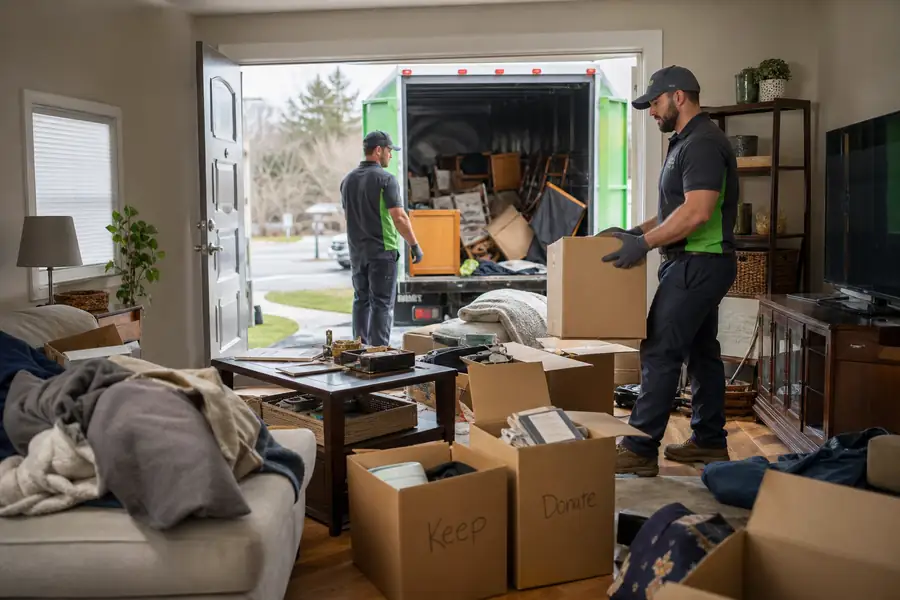
Hoarder cleanout services make sense once the volume, the hazards, or the emotional weight of a job outpaces what a family can safely handle alone. That covers most hoarding cleanouts past the first room or two.
Junk Rhinos handles Hoarding Cleanout jobs with a crew trained to work at the family's pace, without judgment about how the home got there or how long sorting takes. The crew hauls out everything the family has cleared for donation, recycling, or disposal, so nobody has to carry a couch down three flights of stairs or make a dozen dump runs.
Every job starts with a walkthrough and a firm price confirmed on-site before work begins, with no deposit and no fees added later. You can see exactly how the process works from first call to final sweep before deciding anything. If a hoarding cleanup feels too big, too emotional, or too unsafe to take on alone, that's exactly the situation a professional crew is built for.
Aftercare: Supporting Your Family After a Hoarding Cleanout
A finished hoarding cleanout is the start of a new routine, not the end of the story. Relapse into clutter is common without ongoing support, so plan regular, low-pressure check-ins instead of a one-time deep clean and a hope for the best.
Keep the momentum with small habits: a weekly ten-minute tidy, a rule that new items in mean old items out, a calendar reminder to revisit any decide-later boxes. Many families also connect a loved one with a therapist experienced in hoarding disorder, since the anxiety around discarding doesn't disappear once the house is clear.
Ready to get a home back to safe and livable? Request a free, no-obligation estimate and a Junk Rhinos crew will walk the space, confirm a firm price, and handle the hauling with the same patience the family showed getting there.
Frequently asked questions
How long does a hoarding cleanout take?
Most hoarding cleanouts take anywhere from a few hours for a single room to several days for a full home, depending on volume and how much sorting the family wants to do themselves. Splitting the work into multiple shorter sessions instead of one long day usually keeps the process manageable for everyone involved.
Will a hoarding cleanout crew judge the state of the home?
No. Reputable hoarder cleanout services train crews to treat every hoarding cleanup as normal work, not a spectacle, and to focus on hauling and sorting rather than commenting on how the home got that way. A good crew moves at the homeowner's pace and respects their say over what stays and what goes.
What happens to items removed during a hoarding cleanup?
Usable furniture, clothing, and household goods typically get set aside for donation, and materials like metal, cardboard, and electronics get routed to recycling wherever possible. Only items that are broken, contaminated, or unsalvageable go to the landfill, so a hoarding cleanout diverts far more from the trash than most people expect.
Should the family be present during the cleanout?
It depends on the person's comfort level: some homeowners want to be there for every decision, while others do better stepping out and reviewing the donate or keep piles afterward. Either way, the homeowner should have final say over anything with sentimental or financial value before it leaves the property.