
Jump to section
A parent's spare bedroom you haven't set foot in for years. A sibling who hangs up the second you mention "getting rid of stuff." If you're trying to figure out how to help a hoarder who refuses help, you already know that pushing harder usually just makes them push back. There's a slower way in, and it starts with putting the relationship ahead of the clutter.
Key takeaways
- Forced or surprise cleanouts almost always damage trust and often make hoarding behavior worse, not better.
- A harm-reduction approach, small wins instead of an all-or-nothing cleanout, works better and faster over time.
- Hoarding disorder is a recognized mental health condition, not laziness or stubbornness.
- Therapists trained in hoarding disorder and patient, judgment-free cleanout crews each play a different role.
- Certain safety issues, like blocked exits or gas leaks, override the slow approach and require immediate action.
Why Forced Cleanouts Backfire When Helping a Hoarder
Forced cleanouts backfire because they treat hoarding as a mess problem instead of what it actually is: a recognized mental health condition. The International OCD Foundation describes hoarding disorder as persistent difficulty discarding possessions, regardless of their actual value, driven by real distress at the thought of losing them. Strip a home clean while someone is at work or away for the weekend, and you don't just clear clutter. You confirm their worst fear: that people will come in and take away what they've decided matters, without asking first.
That fear tends to make hoarding worse, not better. People who've been through a surprise cleanout often become more guarded, hide belongings from family, or replace what was lost even faster than before. Trust broken this way is slow to rebuild.
Hoarding disorder also exists on a spectrum, from a cluttered garage to a home where exits are blocked entirely. Understanding where a loved one falls among the different levels of hoarding helps you set a realistic goal instead of expecting a full transformation in one visit.
What a Harm-Reduction Approach to Helping a Hoarder Clean Looks Like
A harm-reduction approach to helping a hoarder means aiming for safer and more livable, not spotless, while letting the person keep control of the pace. Harm reduction is a term borrowed from addiction treatment: instead of demanding total change right away, you reduce the most dangerous risks first and build from small, agreed-upon wins.
In practice, that might mean clearing one hallway so it stops being a trip hazard, or bagging obvious trash together while leaving sentimental items untouched for now. It means asking "can we clear this pathway together" instead of announcing a cleanout date. Each small win the person chooses and takes part in builds the trust you'll need for a bigger job later, including an eventual Hoarding Cleanout with a professional crew.

How to Start a Hoarding Intervention Conversation That Doesn't Backfire
Start the conversation by naming your concern for the person, not the condition of their house. "I'm worried about you tripping in the hallway" lands very differently than "this place is a disaster." Lead with observation and care instead of judgment, and expect the first few conversations to go nowhere. That's normal, not failure.
- "I love you, and I'm worried the stove won't be reachable if there's ever a fire."
- "I'm not asking you to get rid of anything today. Can I just help you clear a path to the bathroom?"
- "Would it help to talk to someone who works with people who have a hard time letting go of things?"
- "I'm not judging you. I just want you to be safe in your own home."
Avoid ultimatums like "clean this up or I'm calling someone." A threat confirms the fear that any hoarding intervention is really about control, and that shuts the door fast. Repeat the invitation over weeks or months rather than treating one conversation as a final answer.
When to Bring in a Therapist or a Hoarding Cleanout Crew
Bring in a mental health professional once the person shows any openness at all, because hoarding disorder responds best to therapy that addresses the anxiety underneath the clutter, not just the clutter itself. Cognitive behavioral therapy tailored to hoarding, the kind the International OCD Foundation recommends, helps people practice decision-making and discarding in small, supported steps, often with a therapist who specializes in the condition.
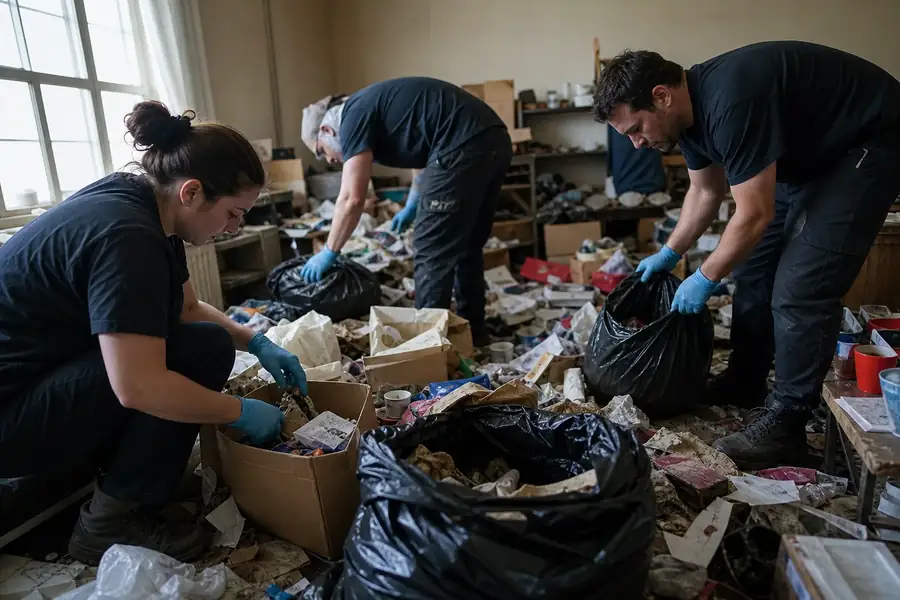
A professional cleanout crew comes in after that emotional groundwork, once the person has agreed to remove items, even if it's only a few boxes to start. Helping a hoarder clean is different from ordinary junk removal. It calls for patience, no rushing, and a willingness to let the homeowner make the calls on what stays. Crews that specialize in this kind of cleanout sort alongside the resident instead of just hauling, and treat every item with respect even when it looks like plain trash to an outsider. Families who want a fuller walkthrough of what a professional cleanout day actually looks like can read our hoarding cleanout guide for families.

Safety Red Lines That Force Immediate Action
Some situations override the slow, patient approach and require action right away, regardless of how the person feels about it. Blocked exits, exposed wiring, structural sagging from stacked weight, gas leaks, active pest infestations, and rotting food or biohazards all cross the line from hard to look at into dangerous to live in.
| Red Flag | Why It's Urgent | Who to Call |
|---|---|---|
| Blocked or narrow exits | No way out during a fire or medical emergency | Fire marshal or code enforcement, plus a cleanout crew right away |
| Structural sagging or floor damage | Stacked weight can cause a floor or ceiling to give way | A structural inspector before anyone re-enters that room |
| Gas leak or exposed wiring | Fire and carbon monoxide risk | Utility company or fire department immediately |
| Active pest or rodent infestation | Disease risk that can spread to neighboring units | Pest control alongside a cleanout crew |
| Spoiled food or biohazard buildup | Illness risk, especially for children or elderly residents | Adult Protective Services or a professional cleanout team |
When you see any of these, skip the harm-reduction pace and call in help immediately, even if it strains trust in the short term. A trip hazard in a hallway can wait for another conversation. A blocked fire exit cannot.
Junk Rhinos crews handle hoarding situations every week, and we know these jobs aren't like a normal garage cleanout. We show up in uniform, quote a firm price on-site before any work starts, and let the homeowner or family set the pace, including pausing entirely if a room needs a second look. If you're not sure whether a situation calls for a full crew or just a conversation, our FAQ page covers how estimates, scheduling, and donation sorting work.
Frequently asked questions
Should I clean up while a hoarder is not home?
No. Cleaning someone's home without their knowledge or consent almost always backfires, even when it comes from a good place. It confirms the person's fear that their belongings and control over them can be taken away without warning, which usually makes future help harder to offer, not easier.
Is hoarding a mental illness or just being messy?
Hoarding disorder is a recognized mental health condition, not a character flaw or laziness. It involves persistent, distressing difficulty discarding possessions regardless of their actual value, and it typically responds to targeted therapy rather than willpower or a single cleanout.
How do I get a hoarder to accept help?
Most people accept help gradually, after repeated, low-pressure conversations that focus on safety and care rather than judgment. Offering small, specific choices, like clearing one pathway, works far better than proposing a full cleanout, and it can take months of patient invitations before someone says yes.
What if my loved one refuses professional help entirely?
Keep the relationship open and keep an eye on the safety red lines, like blocked exits or gas leaks, that require action regardless of consent. If those red lines get crossed, contact Adult Protective Services, code enforcement, or emergency services rather than waiting for the person to agree.
Can a cleanout crew work with someone who is still deciding what to keep?
Yes. A crew experienced in hoarding situations sorts alongside the resident at their pace instead of hauling everything out at once, and pauses when a room needs more time. That patience is usually what makes the difference between a cleanout that sticks and one that gets reversed within weeks.