Specialty removal
Light Demolition & Interior Tear-Out
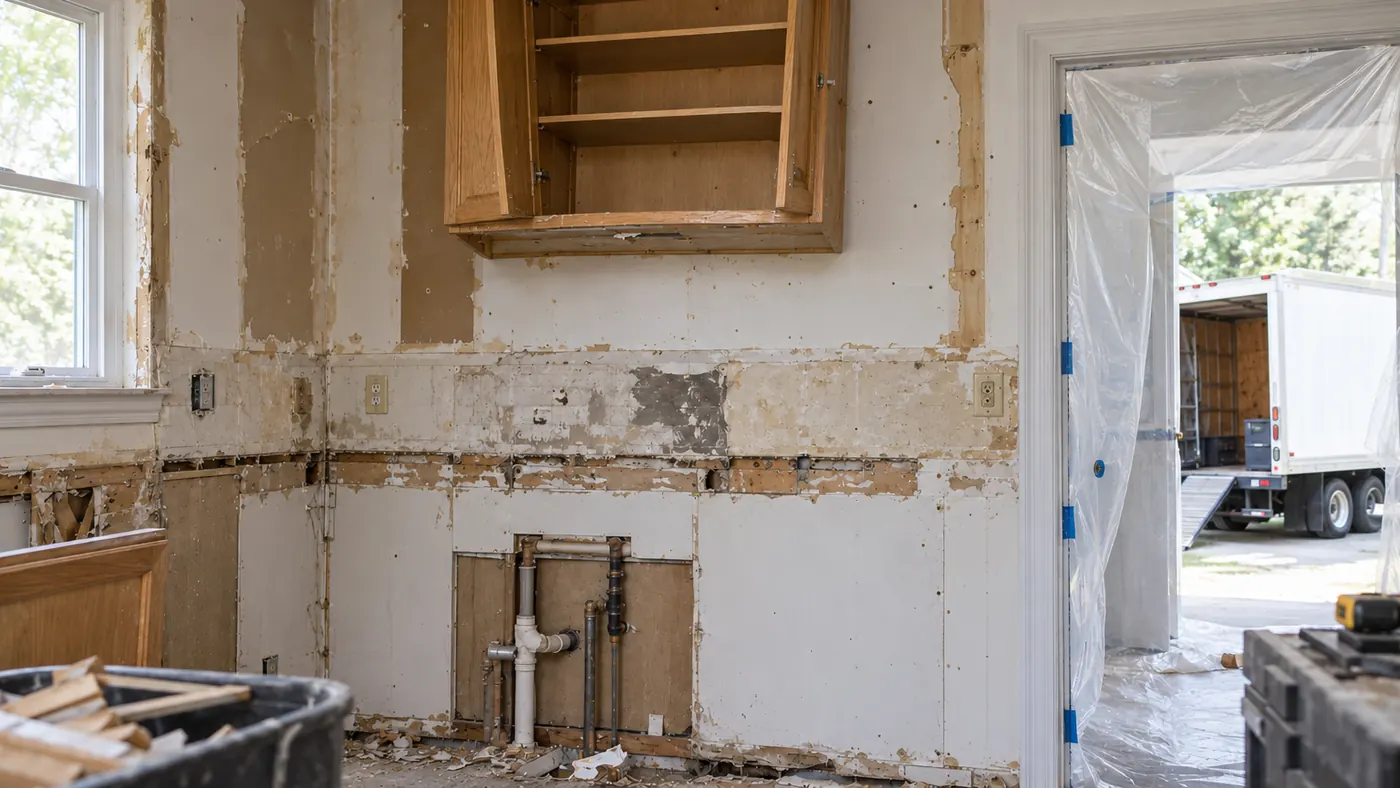
Every remodel starts with the least glamorous part: ripping out the old kitchen, the tired bathroom or the basement nobody ever liked. Junk Rhinos handles that interior demolition for you. Our crews tear out the non-structural parts of a room, cabinets, countertops, vanities, tubs, tile, drywall, carpet and built-ins, load every piece onto the truck, and leave the space swept and ready for your contractor.
Light demolition is exactly what it sounds like: the take-it-apart work that does not touch the bones of the house. No load-bearing walls, no structural changes, no cutting into live plumbing, wiring or gas. That line keeps the job safe and fast, and it keeps your remodel budget pointed at the work that genuinely needs a licensed pro.
- Insured, uniformed crews
- Free on-site estimate
- No deposit, no hidden fees
- Same or next-day in most areas
- We donate & recycle first
Published prices
What light demolition costs
The haul follows the truck tiers: a single bathroom gut usually fills a quarter to half of the truck, from $290, and a full kitchen tear-out with flooring three-quarters to a full truck, from $590. The tear-out labor is added on top of the haul, and tile, stone counters and cast iron add weight; your firm, all-in price covers all of it and is confirmed free on-site.
- Single item~1/16 truckfrom $199
- 1/8 truck~half a pickup bedfrom $199
- 1/4 truck1 pickup bedfrom $290Typical for this job
- 1/2 truck~2 pickup bedsfrom $450Typical for this job
- 3/4 truck~3 pickup bedsfrom $590Typical for this job
- Full truck~18 cu ydfrom $729Typical for this job
Examples
- A single bathroom gut (a quarter to half)1/4 truck, from $290
- A run of kitchen cabinets and counters1/2 truck, from $450
- A full kitchen tear-out with flooring (three-quarters to a full truck)3/4 truck, from $590
- Drywall, carpet and drop ceiling from a finished basement (three-quarters to a full truck)3/4 truck, from $590
Ballpark prices from our published rates. The crew confirms your firm, all-in price free on-site before any work starts. No deposit. Pay online when you book, or after the job.
What light demolition is, and what it is not
Most remodels have two kinds of work in them. One kind changes how the house is built or runs: moving walls, rerouting pipes, adding circuits. The other kind just gets the old stuff out so the new stuff can go in. That second kind is light demolition: anything attached to the house but not holding it up. It is often a surprising share of the labor hours on a remodel quote, and taking it off your contractor's plate is one of the more direct ways to trim the bill.
Where we draw the line
We do not remove load-bearing walls or do any structural work. We do not disconnect plumbing, electrical or gas; licensed trades do those first. We do not do asbestos or lead abatement, and we do not pull permits. Each of those jobs carries real risk and, in most places, a legal requirement for a licensed professional. A junk removal crew improvising any of them would be the most expensive savings you ever made.
Age matters too. Homes built before 1980 may have asbestos in flooring, joint compound, ceiling texture or pipe wrap, and homes built before 1978 lead in old paint. If your home is that age, have the materials tested before demolition starts, because suspected material needs a trained, accredited asbestos professional, licensed where your state requires it, or, for lead paint, an EPA lead-safe certified firm, not us.


What our interior demolition service includes
Tear-out and haul happen in one visit, by one crew, under one price.
Walk-through and scope
The crew confirms what comes out and what stays, checks that utilities are disconnected, and gives you a firm, all-in price before work starts.
Protecting the house
Floors along the carry-out path and doorways are covered, and work areas are closed off to keep dust where it belongs.
Tear-out
Cabinets are unscrewed and pulled, counters lifted, tile broken out, drywall stripped to the studs, fixtures carried out. Tools sized for non-structural work, not sledgehammers swung at random.
Load and haul
Every piece goes straight to the truck as it comes off, so no pile grows in your driveway.
Sweep and hand off
The room is swept and left ready for whichever trade comes next.
Interior demolition jobs we handle
Most calls fall into a short list.
Bathroom demolition before a remodel
A full bathroom gut is the classic light demolition job: vanity, toilet, tub or shower, wall and floor tile, and often some drywall. Once your plumber has capped the supply lines, the crew strips the room to studs and subfloor. Cast iron tubs come out in pieces or with extra hands; mention one when you book.
Kitchen demolition: cabinets and countertops out
Upper and lower cabinets, laminate or stone countertops, backsplash tile, soffits and the old range hood. Cabinets are bulky but light; stone counters are the heavy part. Want the cabinets kept whole for donation or the garage? Say so before work starts. Old appliances can ride along under appliance removal.
Basement drywall, paneling and drop ceilings
Finished basements from a few decades back come out in layers: wood paneling, drop ceiling tiles, carpet glued to concrete, a bar nobody uses. After a flood, it is water-damaged drywall and carpet once the restoration company has dried things out. A basement cleanout of the contents can happen in the same visit.
Flips and investment properties
A flipper's budget lives and dies on labor costs and days on the calendar. We gut kitchens, baths and flooring across a property and have it ready for your trades on schedule. If the house also came full of the previous owner's belongings, the property cleanout and the tear-out can be scoped together.
Landlords between tenants
Turnover is a race against an empty month. Pulling worn carpet, a damaged vanity or a water-stained ceiling between tenants is quick work, and several units in one building can be done in one visit.
Contractors short on labor
Your carpenters and tile setters are expensive people to have carrying tile to a dumpster. Book us for the tear-out and haul, and your crew starts on day one doing the work they are good at, on your schedule and site rules.
Sheds, decks and the other outside jobs
Small outdoor structures are light demolition with more weather. Both have their own pages with the details: shed removal and deck removal.
Straight talk
Before we arrive: what you need to do
Get the disconnects done
Water to the sink, toilet and tub shut off and capped by a plumber. Circuits for lights, outlets and disposals safely terminated by an electrician. Gas to ranges or water heaters disconnected and capped by a licensed professional. Our crew will not start on a fixture that is still connected, and that is a rule, not a negotiating position.
Test older homes first
If the house was built before 1980, arrange asbestos testing (and lead testing if it was built before 1978) on the materials coming out, especially old vinyl flooring, black mastic, ceiling texture, joint compound and painted trim. If anything comes back positive, a trained, accredited asbestos professional, licensed where your state requires it, or, for lead paint, an EPA lead-safe certified firm, handles it first.
Pull any required permits
Many cities require permits for remodels, and some for demolition. The homeowner or general contractor pulls any required permits. We do not.
Clear the room
Take out anything you are keeping: dishes, towels, the good mirror. Furniture in the way can be moved aside or hauled if you no longer want it.
What we tear out and what we do not
We tear out and haul:
- Kitchen cabinets, countertops, backsplash and soffits
- Bathroom vanities, toilets, sinks, mirrors and medicine cabinets
- Bathtubs, including cast iron, and shower surrounds
- Wall and floor tile
- Drywall and plaster on non-load-bearing walls and ceilings
- Carpet, pad, tack strip and most floating floors
- Built-ins, shelving, closet systems and wood paneling
- Drop ceiling grids and tiles
- Small outdoor structures like sheds and decks
We do not remove load-bearing walls or do any structural work, and we do not disconnect or cap plumbing, electrical or gas. We do not remove asbestos or lead-containing materials, or anything suspected of being either, and we do not pull permits. We also do not take paints, solvents, adhesives, chemicals or fuels; your household hazardous waste program is the right home for those.
What does interior demolition cost?
Light demolition is two jobs priced as one: the tear-out and the haul. The haul follows our volume pricing, by the truck space the debris fills. The tear-out adds labor, and tile, stone counters and cast iron add weight. The crew confirms a firm, all-in price on-site, free, while the old kitchen is still standing.
For a sense of scale: a single bathroom gut usually fills a quarter to half of the truck, and a run of kitchen cabinets and counters about half. A full kitchen tear-out with flooring, or the drywall, carpet and drop ceiling from a finished basement, usually takes three-quarters to a full truck. Whole-house tear-outs run to two or more full loads and are priced after a walk-through. You can see how the volume tiers work on our pricing page.
- Priced by the truck space your load fills
- Firm, all-in price confirmed free on-site
- No deposit, and nothing owed until it is done
- Labor, hauling and disposal fees all included
How long does interior demolition take?
Most single bathrooms come out in a few hours, and most kitchens in half a day to a full day, depending on the cabinets and the tile. A finished basement typically takes a day. Whole-house tear-outs run one to several days, and the crew gives you a realistic timeline at the walk-through so your trades can be scheduled behind it.
What happens to the materials
Most demolition debris is not reusable, but some is. Cabinets and vanities removed intact can be donated where a local charity accepts them. Steel and cast iron tubs, sinks and metal shelving go to metal recycling. Drywall, wood and other materials go to construction and demolition recycling where your area has it, and the rest to proper disposal.
Frequently asked questions
How much does bathroom demolition cost?
It depends on the size of the room, what comes out and how heavy it is. A single bathroom gut usually fills a quarter to half of the truck, and tile, cast iron tubs and the tear-out labor all add to the price. The crew confirms a firm, all-in price free on-site before starting.
How much does interior demolition cost for a whole house?
Whole-house tear-outs usually take more than one truckload, so they are priced after a walk-through. The price reflects the number of loads, the tear-out labor and any heavy materials like tile or stone, and you approve the firm figure before work begins.
Do you remove load-bearing walls?
No. We do not touch load-bearing walls or do any structural work. That needs an engineer's input and a licensed contractor.
Can you disconnect the sink, toilet or gas range?
No. Plumbing, electrical and gas disconnects are licensed-trade work and must be done before we arrive. Once everything is shut off and capped, the crew handles the rest.
Do I need a permit for interior demolition?
It depends on your city and the scope of the remodel. The homeowner or general contractor pulls any required permits; we do not.
My house is old. Is that a problem?
Homes built before 1980 may contain asbestos, and homes built before 1978 lead, in materials that demolition disturbs. Have those materials tested first. Asbestos and lead abatement are excluded from our service and need a trained, accredited asbestos professional, licensed where your state requires it, or, for lead paint, an EPA lead-safe certified firm.
My contractor already did the demo. Can you just haul the debris?
Yes. That is our construction debris removal service, priced by volume with no tear-out labor involved.
Can you take out kitchen cabinets without destroying them?
Usually, yes, if you tell us before work starts. The crew unscrews and removes them carefully so they can be reused or donated, which takes a little longer than a straight tear-out.
Do you remove cast iron bathtubs?
Yes. They are very heavy, so mention one when you book. The crew brings extra hands or breaks it into sections, and the weight is reflected in the firm price.
How do you keep dust under control?
Work areas are closed off, floors and doorways along the carry-out path are covered, and debris goes straight to the truck instead of piling up inside. Demolition is never dust-free, but it should not end up in your bedrooms.
Is bathroom demolition available in my area?
Local crews serve most areas, and same-day or next-day slots are often available. Check our locations page or call, and we will get your local crew booked.
How do I know if old flooring or drywall contains asbestos?
Usually you cannot tell by looking. EPA lists vinyl floor tiles, the backing and adhesive on sheet vinyl, and textured paint and patching compounds on walls and ceilings among the materials that may contain it. EPA's homeowner guidance says a trained and accredited asbestos professional should take samples, that taking them yourself is not recommended, and that an inspection makes sense if you are planning to remodel.
For flooring, the federal workplace rule sets a date: OSHA's construction asbestos standard treats asphalt and vinyl flooring installed no later than 1980 as asbestos-containing unless it is shown not to be.
My home was built before 1978. Does that change a tear-out?
It can. EPA's lead-safe rules for renovation work apply to work that disturbs painted surfaces in homes built before 1978, and EPA estimates that about three-quarters of US homes built before then still contain some lead-based paint. Tell us your home's age when you book, and we will confirm what we can take.
Sources we checked
Rules and fees on this page come from these official sources. Local rules can differ, so check with your city or county too.
How to Dispose of Paint: Latex, Oil-Based, and Spray Cans
What to do with leftover paint cans from the old kitchen, since they stay off the truck.
Appliance Haul Away: The Complete Removal and Disposal Guide
How the old range, dishwasher and fridge from a kitchen remodel are disposed of, and why refrigerant matters.
How to Choose a Junk Removal Company (10 Questions to Ask)
The questions to ask before you book a tear-out crew, including what the quote covers.
Ready when you are
Get the old kitchen or bathroom out of the way so the remodel can actually start. Call (877) 283-1595 or request a free estimate online, and your contractor walks into a stripped, swept room instead of a weekend of demo.