Quick answer
Start clearing out six to eight weeks before moving day. Sell first, donate second, and book one junk pickup for what is left about a week before you move. The usual candidates are worn mattresses, broken furniture, old electronics, duplicate kitchen gear, expired pantry and bathroom items, and garage clutter you have not touched in a year.
Jump to section
Most moving checklists cover boxes, utilities and the moving truck. They skip the part that makes everything else easier: getting rid of what you do not want to carry. Every box you leave behind is one less to pack, load, unload and unpack in the new place.
This checklist works backward from moving day. It covers what to get rid of in each room, where each kind of item should go, and how much truck space a typical cleanout takes.
Key takeaways
- Begin sorting six to eight weeks out, so items you plan to sell have time to sell.
- Use three piles in every room: keep, sell or donate, and haul away.
- Book your junk pickup for the week before the move, after the sell and donate deadlines pass.
- Paint, chemicals, fuel and propane cannot go in a junk truck. Plan a trip to your household hazardous waste site.
- A furnished one-bedroom fills about three-quarters to a full junk removal truck when everything goes. A moving purge takes a fraction of that.
The moving declutter timeline
Six to eight weeks before the move
- Walk every room, closet, the garage and any storage unit with a notepad. List the big items you will not take.
- Measure the rooms in the new place. A sectional that does not fit the new living room is a sell-now item, not a pack-and-hope item.
- List furniture and appliances for sale now. Big items take the longest to sell.
Four to five weeks before
- Sort one room per weekend into keep, sell or donate, and haul away.
- Schedule donation pickups or drop-offs. Our guide to donating furniture with free pickup walks through how to set one up.
- Start eating down the freezer and pantry.
Two to three weeks before
- Set a deadline for anything still unsold. Past that date, it moves to the donate or haul pile.
- Gather paint, cleaners, pesticides and fuel for a trip to your local household hazardous waste site.
- File your mail forwarding. USPS says to allow at least 7 to 10 business days after approval for forwarding to take effect, and the online request carries a $1.25 identity verification fee.
The week before
- Book your junk pickup. Same-day or next-day pickup is available in most areas, but booking a few days ahead lets you choose the time.
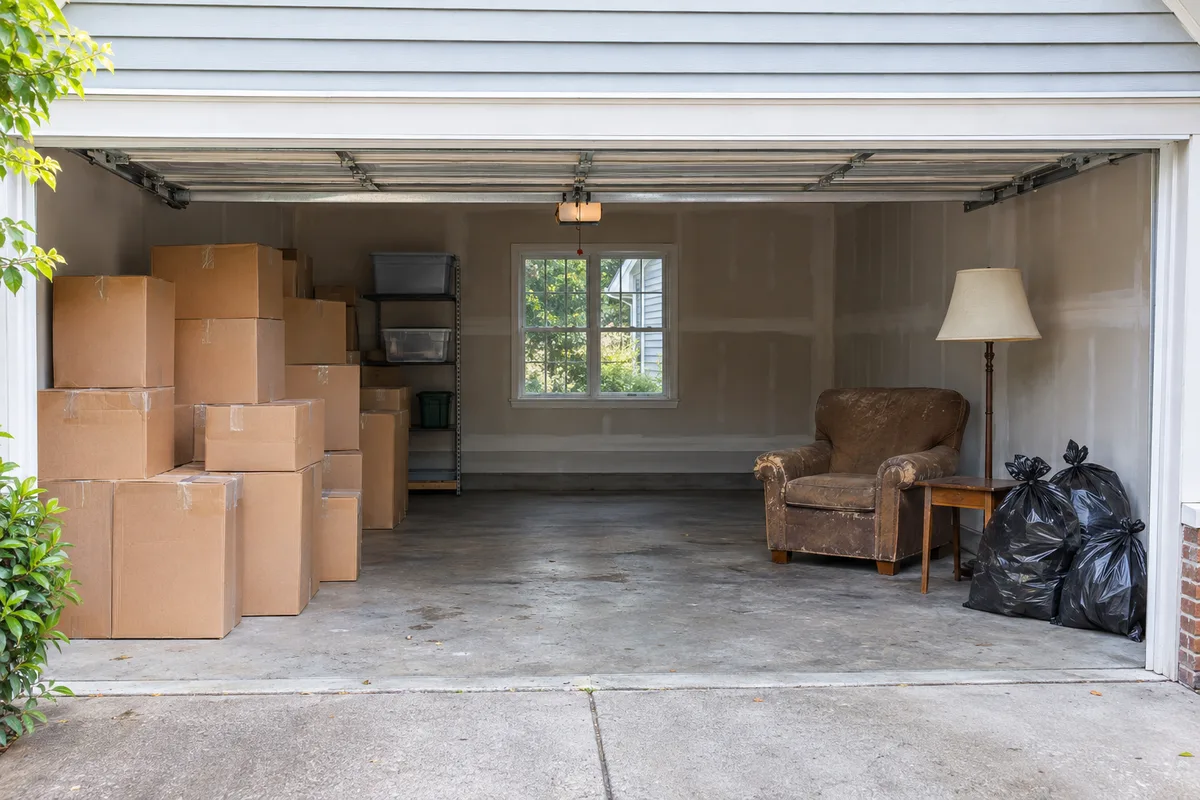
- Stage the haul-away pile in one spot, such as the garage or a spare room, so the crew loads it in one pass.
- Wipe personal data from phones, computers and tablets you are not keeping.
Moving day and after
- Do a last walk-through for anything left in closets, cabinets, the attic and the shed.
- If you rent, check your lease for what the unit must look like at move-out.
Room by room: what to get rid of
Bedrooms
- Sagging or stained mattresses and box springs. Moving a bad mattress costs the same effort as moving a good one.
- Bed frames with stripped bolts or cracked rails.
- Clothes that have not been worn in a year. Clean pieces in good shape can be donated.
- Extra pillows, worn bedding and old lamps.
Living room
- Couches and recliners that will not fit the new space or are already worn through.
- Old TVs, DVD players, speakers and the cables nobody can match to a device. See our e-waste removal page for how electronics are handled.
- Rugs that do not suit the new floor plan.
- Bookcases full of books, DVDs and magazines you will not unpack.
Kitchen and dining
- Duplicate pots, pans, mugs, plastic containers without lids, and small appliances you have not used in a year.
- Expired spices, canned goods and opened pantry items that will not travel well.
- A dining set that is too big, or too small, for the new place.
- An older refrigerator, if the new home already has one. We haul refrigerators to facilities set up for refrigerant-bearing units.
Bathrooms and laundry
- Expired medicine, old toiletries and half-empty bottles. Liquids leak in moving boxes.
- Worn towels and bath mats.
- A washer and dryer that is not going with you.
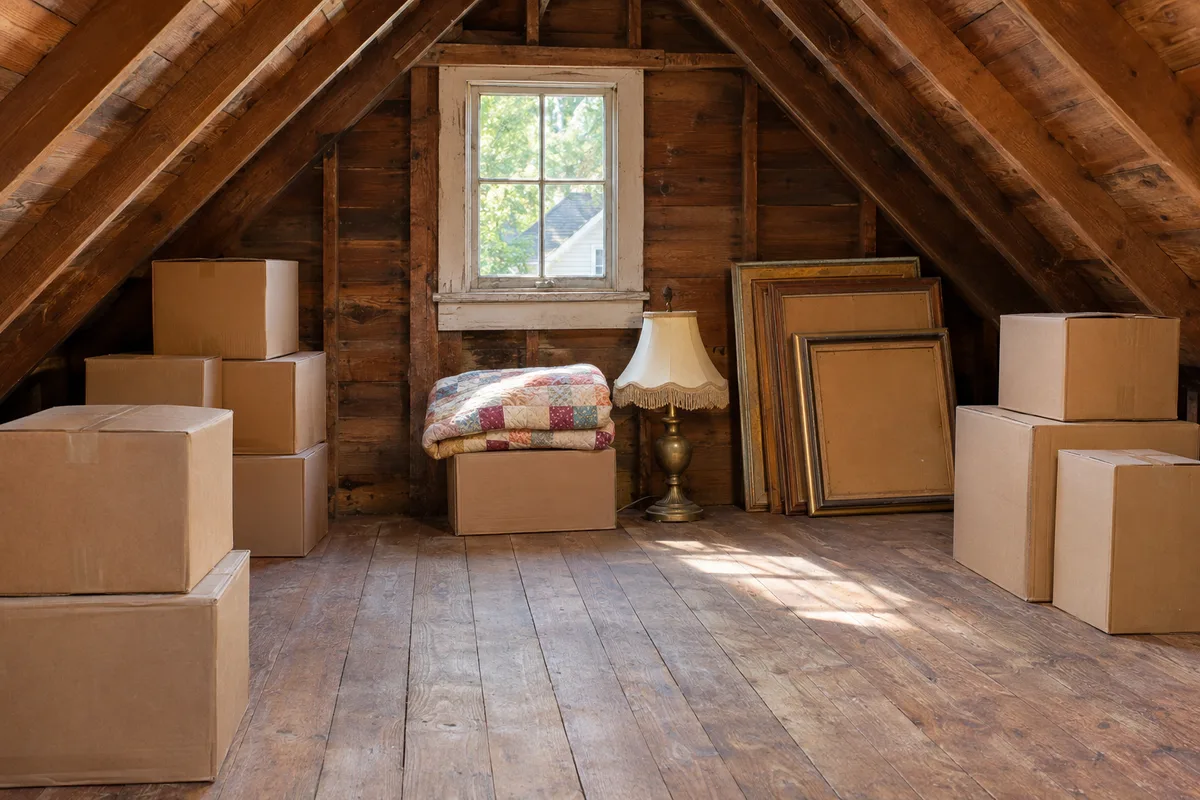
Garage, basement and attic
These spaces hold the most forgotten items and are where most moving cleanouts get big. Look for:
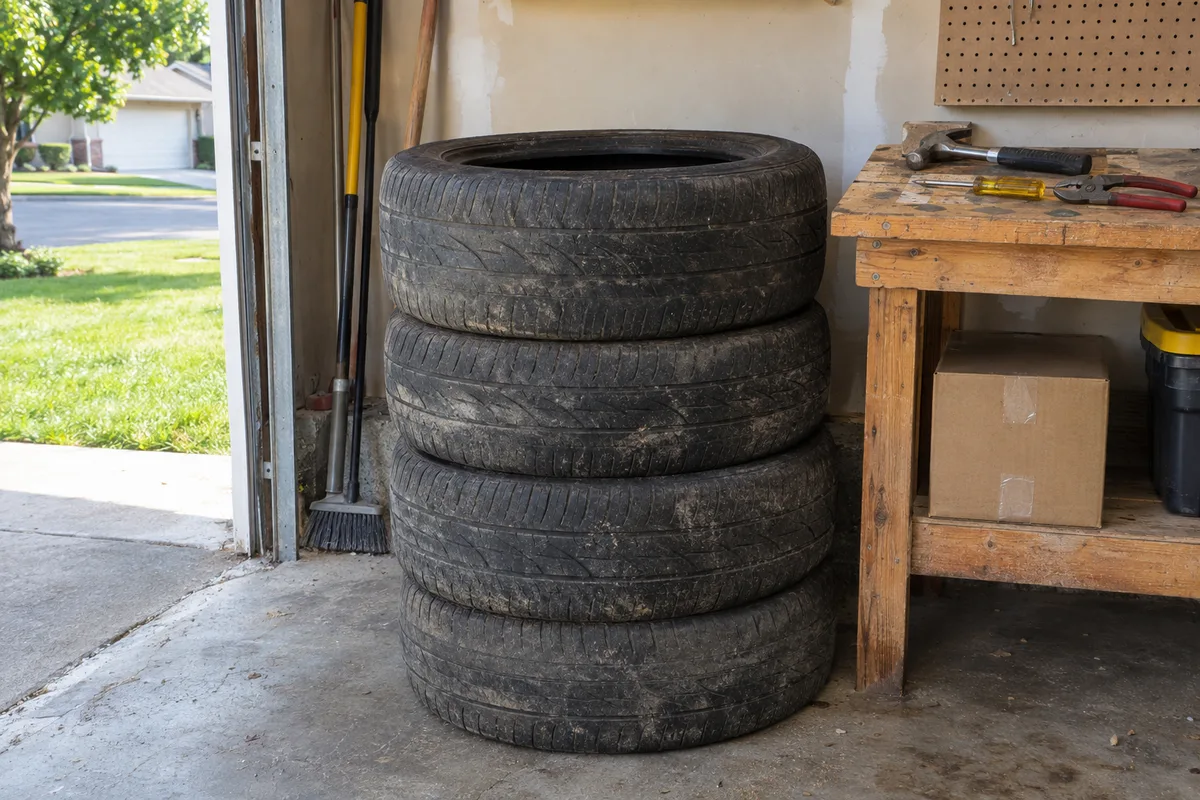
- Broken tools, old lawn equipment and exercise machines that turned into clothes racks.
- Scrap lumber, leftover flooring and tile from old projects.
- Boxes that were never unpacked after your last move.
- Holiday decorations you no longer put up, plus kids' toys and furniture they have outgrown.
For more ideas for the haul pile, see our list of things to get rid of today.
Where each pile should go
| Item type | Best route |
|---|---|
| Furniture and appliances in good working shape | Sell, or donate with a scheduled pickup |
| Clean clothing, housewares and books | Donate |
| Worn furniture, mattresses, broken items | City bulk pickup if your timing fits, or a junk removal pickup |
| TVs, computers and other electronics | Wipe your data, then donate or recycle |
| Paint, cleaners, pesticides, oil, fuel, propane | Your local household hazardous waste site |
| Food | Eat it down, share unopened items, toss the rest with regular trash |
City bulk pickup is the free option for worn furniture, but it runs on the city's calendar and limits what you can set out. Our comparison of bulk trash pickup vs junk removal shows the rules in 10 large cities, so you can tell whether the next pickup lands before your move.
For electronics, the EPA's guidance is to delete all personal information from devices before you donate or recycle them.
What we cannot take
Moves turn up the half-empty paint cans and garage chemicals that have sat on a shelf for years. We do not take paint of any kind, stains, solvents, pesticides, pool chemicals, motor oil, antifreeze, fuel, propane tanks or other household hazardous waste. The EPA says these products should never go down a drain, on the ground, into a storm sewer or into the regular trash, and that your local environmental, health or solid waste agency can point you to an HHW collection site. Our page on what we don't take lists the rest and where each item goes. Ask your moving company for its own list of items it will not carry, too.
How much truck space a moving cleanout takes
We price by how much of our 18-cubic-yard truck your load fills. When a whole space is being cleared out, these are typical sizes:
| Space being cleared | Typical truck space | Ballpark price range |
|---|---|---|
| Furnished studio | About half to three-quarters of a truck | $450 to $590 |
| Furnished one-bedroom | About three-quarters to a full truck | $590 to $729 |
| 5x10 storage unit holding a room of furniture | About half to three-quarters of a truck | $450 to $590 |
| 10x10 storage unit holding a one-bedroom | About three-quarters to a full truck | $590 to $729 |
| Furnished two- or three-bedroom house | Usually one to two full trucks | From $729 per full truck |
A moving purge is smaller, because most of the furniture goes with you. One couch fits the $199 single-item minimum. A few pieces might fill 1/8 of the truck, about half a pickup bed, from $199, and a quarter truck, about one pickup bed, is a ballpark $290. These are national starting points, and your quote shows the price for your ZIP. Loading, hauling and disposal are included, and the firm price is confirmed free on-site before any work starts. See our pricing page for every tier.
If you are clearing out completely, our apartment cleanout, house cleanout and storage unit cleanout services handle the full job, from the back of the closet to the curb. We donate usable items and recycle metal and electronics where we can.
When your haul pile is staged, get a free estimate with your ZIP, a load size and a few photos.
Sources we checked
- United States Postal Service, Standard Forward Mail and Change of Address, checked November 17, 2026
- US EPA, Household Hazardous Waste (HHW), checked November 17, 2026
- US EPA, Electronics Donation and Recycling, checked November 17, 2026
Frequently asked questions
How far ahead should I start decluttering before a move?
Six to eight weeks gives you time to sell larger items, schedule donation pickups and sort one room at a time. If you have less time, skip selling and split everything into donate and haul away.
When should I book junk removal before moving day?
About a week before the move works well. By then your sell and donate deadlines have passed, and the crew can take everything left in one trip. Same-day or next-day pickup is available in most areas if you run short on time.
What should I not pack when moving?
Leave out paint, chemicals, fuel, propane and other hazardous products, plus expired food and toiletries. Take hazardous items to your local household hazardous waste site, and ask your mover for its list of items it will not carry.
How much does junk removal cost for a move-out?
It depends on how much truck space your items fill. National ballpark prices start at a $199 minimum for a single item, $450 for about half a truck and $729 for a full truck. A furnished one-bedroom being cleared out fills about three-quarters to a full truck.
Can you haul everything left in my apartment after I move out?
Yes. Our apartment cleanout service clears furniture, mattresses, appliances, electronics and boxes, and we leave the space broom-swept. We do not take hazardous waste or do deep cleaning, so plan for those separately.