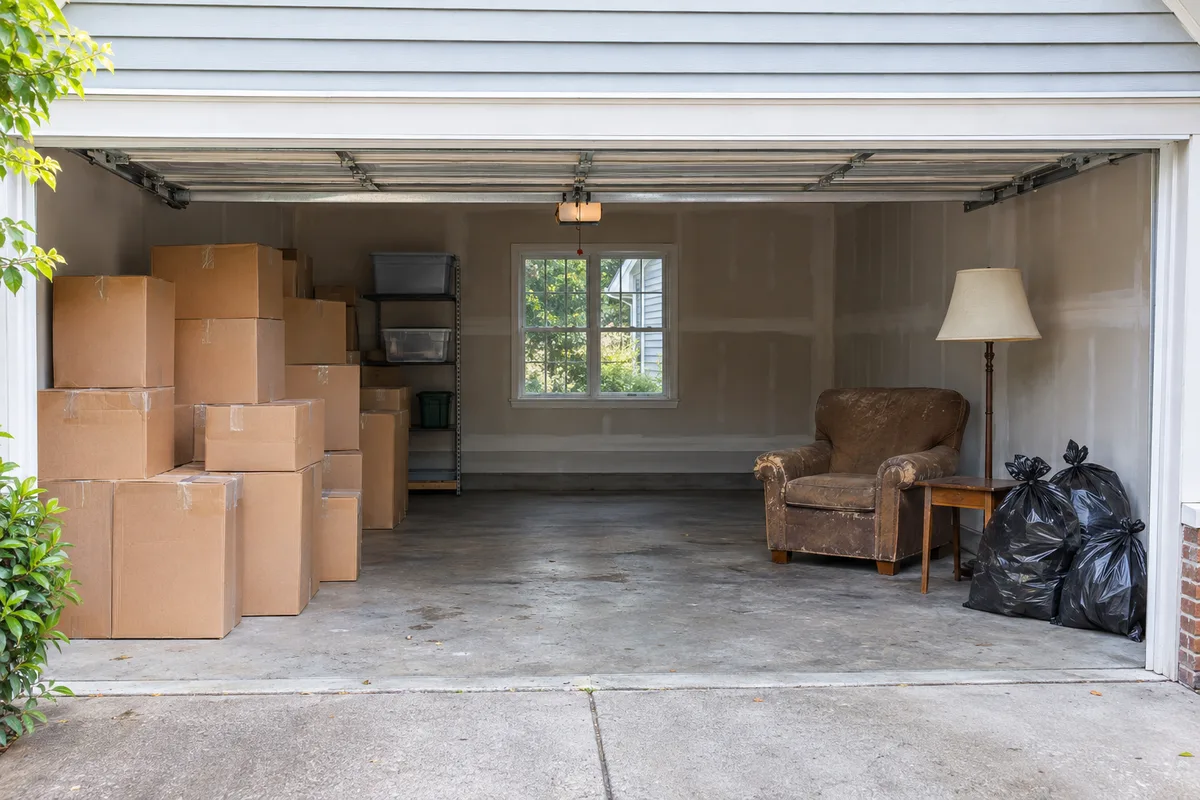
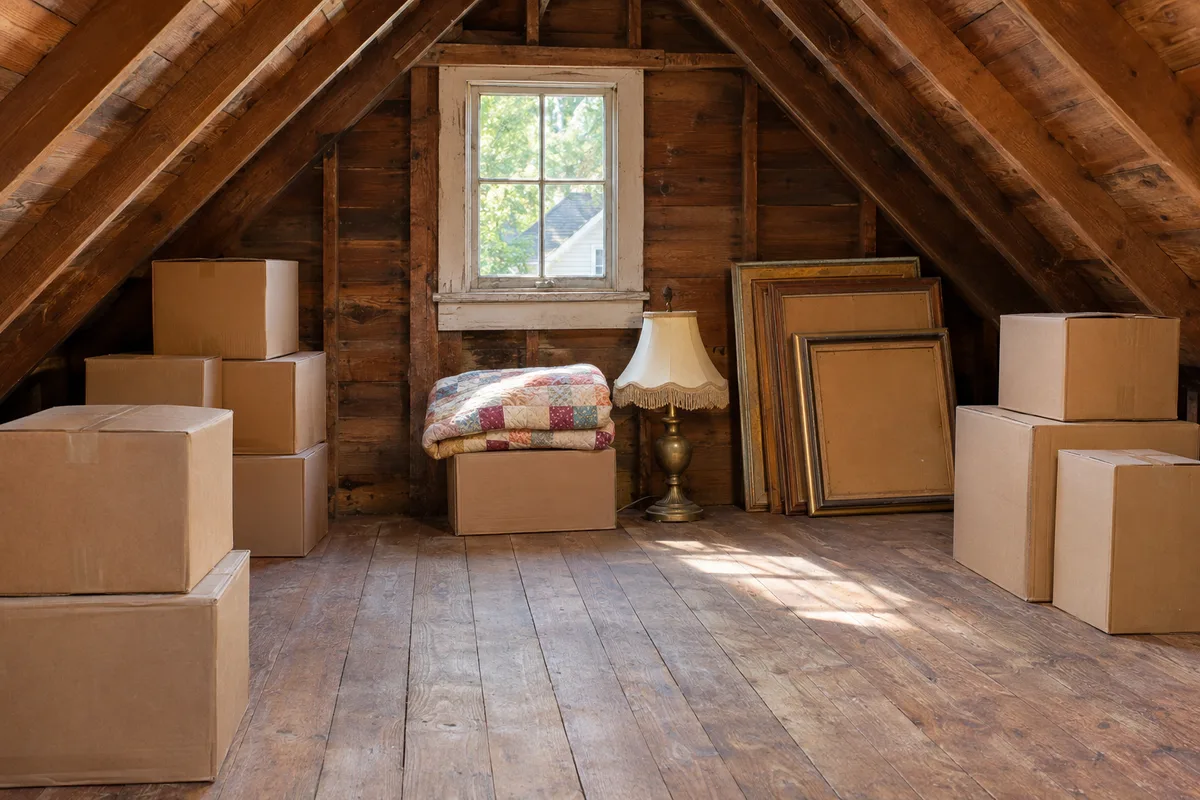
Quick answer
Swedish death cleaning (döstädning) means sorting your own belongings while you are healthy, so your family does not have to do it later. Margareta Magnusson's method is to start with large items and storage spaces, leave photos and personal papers for last, tell your family what you are doing, and take your time. Once the keep pile is set, a hauling crew can clear what is left in one visit.
Jump to section
The Associated Press calls it a Swedish tradition, and it reached a wide audience through Magnusson's book, The Gentle Art of Swedish Death Cleaning. She wrote it while describing herself as somewhere "between 80 and 100 years old," and her daughter told The World in March 2026, after Magnusson's death at 91, that the book had sold in more than 30 countries.
The name sounds grim. The practice is mostly about kindness and a calmer home. Below is the method in her words where we could source them, a room-by-room plan built on it, tips for the family conversation, and where hauling help fits in.
Key takeaways
- Döstädning translates literally from Swedish as "death cleaning." It is decluttering done by you, for the people who come after you.
- Magnusson told The Globe and Mail the ideal age to start is 65, though you can start any time.
- Start with the large items and finish with the small. Do not start with photographs or personal papers.
- She spent about a year on her own home, a week per room, with breaks between.
- Tell family and friends early, and give them a chance to claim things before anything is donated or hauled.
What Swedish Death Cleaning Is
Döstädning translates literally as "death cleaning." An Associated Press story on Magnusson's book, published in December 2017, described it as a tradition of streamlining your belongings while you are still healthy enough to do it, and said it is generally done by people 65 and older.
The goal is practical. When someone dies, the people closest to them usually have to sort a lifetime of possessions under time pressure and grief. Death cleaning moves that job forward to a time when the owner can make the decisions, tell the stories behind the objects, and pass things on in person.
Magnusson's motto, as reported by The Local in Sweden, is short: "If you don't love it, lose it. If you don't use it, lose it." The same article says she believed people should start working toward a more organized life by about 40.
Magnusson's Core Rules
Different interviews quote her on different parts of the method. Put together, the rules are:
- Start early. "The ideal age to start is 65, but you can begin anytime. The sooner the better," she told The Globe and Mail in January 2018.
- Go from big to small. "Size matters, so start with the large items in your home, and finish with the small."
- Leave the emotional things for last. "Whatever you do, don't start with photographs or personal papers." Photos are slow to sort, so leaving them for last keeps the rest of the house moving.
- Begin in the storage spaces. The AP story says to start with the basement, the attic and the closets near the front door, and to do the least sentimental categories, such as clothes and books, first.
- Tell people. "Tell your loved ones and friends what you are up to," she advised in the AP piece.
- Take your time. She said she took a year on her own home and spent a week on each room, followed by a break.
None of this requires a deadline or a target number of items. The test for each object is simple: do you use it, do you love it, and would anyone you know want it.
A Room-by-Room Plan Built on Her Method
Here is one way to turn those rules into a schedule. It follows her order: storage first, big pieces next, sentimental items last. The week-per-room pace is hers; the rest is a suggestion you can stretch or squeeze.
| Stage | Where | What to decide |
|---|---|---|
| Weeks 1 to 3 | Basement, attic, garage, front hall closets | Boxes nobody has opened in years, old sports gear, broken appliances, spare furniture |
| Weeks 4 to 6 | Living and dining rooms | Extra chairs, side tables, cabinets, rugs and the furniture that no longer fits how you live |
| Weeks 7 to 9 | Bedrooms and closets | Clothes, shoes, linens and spare beds; keep what fits and what you wear |
| Weeks 10 to 11 | Books, kitchen and hobby rooms | Duplicate dishes, unused small appliances, books you will not read again, craft supplies |
| Weeks 12 and later | Papers, photos, letters and keepsakes | Which photos go to whom, what papers family will need, and what should be shredded |
Our room-by-room downsizing plan for seniors is a good companion if a move to a smaller home is part of the picture. It focuses on measuring the new space and fitting furniture to it, which death cleaning does not cover.
Tips for each session
- Set up four labeled areas before you start: keep, family, donate or sell, and go.
- Work in short blocks. Two or three hours at a time is easier to sustain over a year than whole weekends.
- Move the "go" pile out of the room the same day, to the garage or a single staging spot, so you do not sort it twice.
- Leave important papers (wills, deeds, insurance, account lists) in one clearly marked folder and tell someone where it is.
Having the Family Conversation
Magnusson's advice to tell people early does two jobs. It gives relatives the chance to claim things they care about, and it removes the surprise later. Some practical ways to have the talk:
- Frame it as a gift of time. You are making their future easier, not planning for the worst.
- Ask before assuming. Adult children often do not want the china or the dining set, and they may want something small you never thought of.
- Give a pickup window. If someone claims a dresser, agree on a date for them to collect it, and say what happens if they do not.
- Write claims down. A shared list or tags on furniture avoids disputes later.
- Decide on private items. Diaries, letters and personal papers can upset the people who find them. Decide now what to keep, what to pass on and what to shred.
If the parent has already died and the family is doing this work after the fact, our guide to cleaning out a house after a death covers that situation.
What to Do With Everything You Let Go
Once family has had its pick, what remains falls into a few streams:
- Sell. Furniture in good shape, collections and tools can sell privately or through an estate sale. Our sell, donate or junk decision guide helps decide which items are worth the effort.
- Donate. Some charities pick up furniture in good condition. See donating furniture with free pickup for how those programs work.
- Recycle. Old electronics, metal and some appliances can be recycled rather than landfilled.
- Haul. Worn furniture, broken items, mattresses and general clutter that nobody wants.
- Hazardous leftovers. Old paint, solvents, pesticides, pool chemicals and propane tanks need your county's household hazardous waste site, a PaintCare drop-off or a propane exchange. Junk Rhinos does not take any of them.
When to Call for Hauling Help
Death cleaning is a do-it-yourself project in spirit, but the heavy lifting does not have to be. Hauling help makes sense when:
- Large furniture has to come down stairs or out of a basement or attic.
- The "go" pile has grown bigger than a car can carry to the dump in a few trips.
- A move date is fixed and the sorting is done, but the house is still full.
- The parent doing the cleaning should not be lifting, and family lives far away.
Junk Rhinos crews load from wherever the items are, including attics and basements, and haul them in one visit. We donate usable items and recycle metal, electronics and green waste where we can. Pricing is by volume, and online prices are ballpark estimates:
| Load | Truck space | Ballpark price |
|---|---|---|
| One item, such as a couch or a mattress | Minimum, about 1/16 truck | $199 minimum |
| A pickup bed of boxes and small furniture | 1/4 truck | $290 |
| A garage corner plus a bedroom set | 1/2 truck | $450 |
| A furnished one-bedroom's worth | 3/4 truck to a full truck | $590 to $729 |
A crew confirms a firm, all-in price on-site before any work starts, with loading, hauling and disposal included and no deposit. For a whole household, see our estate cleanout and house cleanout pages. When the keep pile is settled, you can start a free estimate with your ZIP code and a few photos.
Sources we checked
- The Associated Press via The Salt Lake Tribune, From Sweden, an unsentimental take on de-cluttering with The Gentle Art of Swedish Death Cleaning (December 1, 2017), checked November 17, 2026.
- The Globe and Mail, Why author Margareta Magnusson wants you to start death cleaning (January 17, 2018), checked November 17, 2026.
- The Local Sweden, Swedish death-cleaning is something we should all think about, and enjoy (October 17, 2017), checked November 17, 2026.
- The World from PRX, Remembering Margareta Magnusson, the author who introduced us to Swedish death cleaning (March 18, 2026), checked November 17, 2026.
Frequently asked questions
What does döstädning mean?
It is Swedish for "death cleaning." It describes sorting and reducing your own belongings while you are able, so family members do not inherit the job.
At what age should you start Swedish death cleaning?
Magnusson said the ideal age is 65, but that you can begin at any time and sooner is better. She also suggested working toward a more organized home by about 40.
Where should you start?
Start with large items and storage spaces such as the basement, attic and hall closets, and with low-emotion categories like clothes and books. Leave photographs and personal papers for the end.
How long does Swedish death cleaning take?
There is no set timeline. Magnusson said she took about a year on her own home, about a week per room with breaks in between.
Can a junk removal company help with death cleaning?
Yes, once the decisions are made. A crew can carry out and haul the items you have decided to let go, including heavy furniture from attics and basements. Hazardous items such as paint and chemicals go to a household hazardous waste site instead.