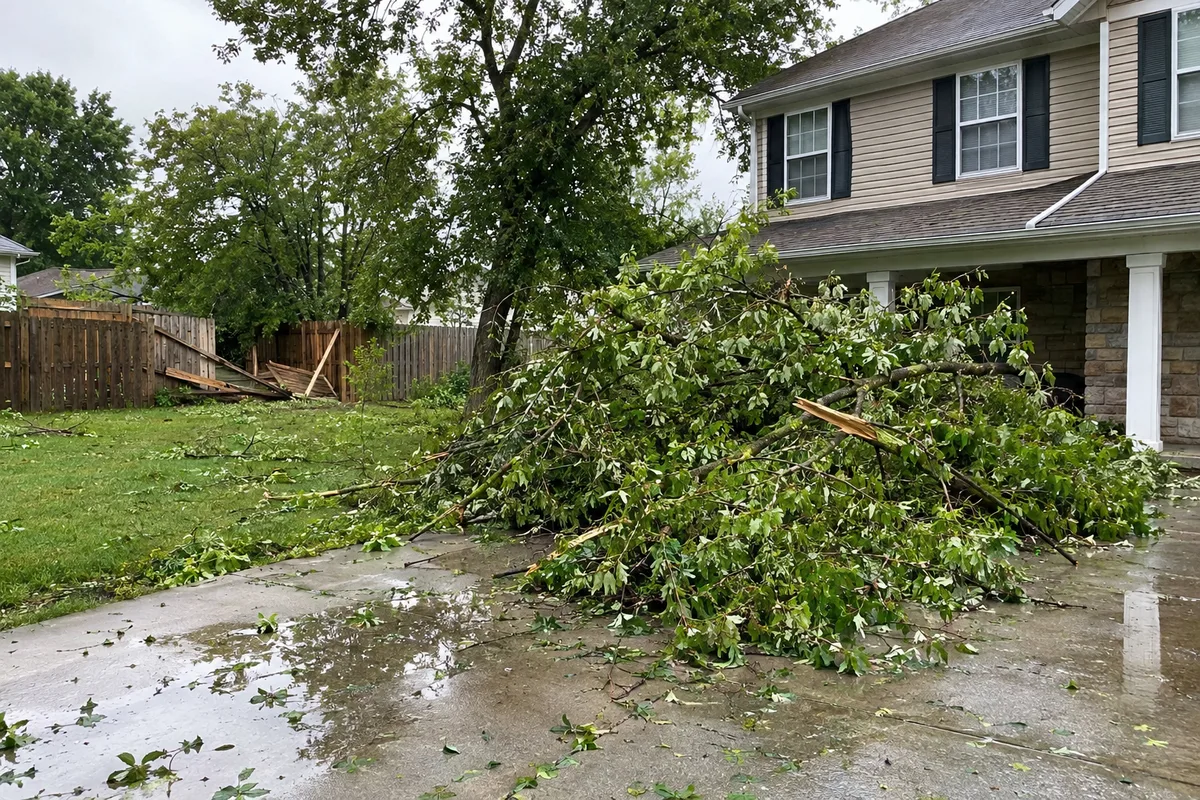
Quick answer
After a storm, photograph and video every bit of damage before you move anything, then sort debris into the separate piles FEMA describes: vegetation, construction debris, appliances, electronics, hazardous waste and household garbage. Put piles where local officials tell you and wait for their pickup if your area has one. Hire a hauler when the city will not take it, the volume is too big, or you need the space cleared fast.
Jump to section
Storm cleanup goes wrong in two predictable ways. People throw out damaged items before the insurance adjuster has seen them, and they pile everything together at the curb instead of sorting it the way collection crews ask. Both are avoidable with an hour of planning.
This guide follows the sorting categories FEMA publishes, the claim advice from the National Association of Insurance Commissioners (NAIC), and the safety steps FEMA lists for debris cleanup. It also spells out which parts a junk removal crew can handle and which parts need a different kind of company.
Key takeaways
- Document first. NAIC advises photos or video and a written list of damaged and lost items before you remove anything.
- Sort into separate piles. FEMA's curbside categories are electronics, large appliances, hazardous waste, vegetative debris, construction debris and household garbage.
- Keep piles clear of trees, poles, hydrants and meters, and never block the road.
- Stay away from downed power lines. Never touch, cut or pile debris on them.
- We haul downed limbs, brush, wet drywall, carpet, furniture and appliances. We do not cut standing trees, tarp roofs, extract water, treat mold or sanitize.
Step 1: Make it safe before you start
FEMA's guide to staying safe during debris cleanup starts with protective gear: long pants, sturdy shoes, goggles, gloves and a mask. It also warns you to stay out of damaged buildings and to watch for snakes and other animals.
The rules around power are strict. FEMA says never touch, cut, remove or place debris on downed power lines, and to leave visible cables to professionals. Call your utility for any line that is down or tangled in a tree.
If you run a chainsaw on fallen limbs, FEMA asks for extra precautions and a safe distance for anyone nearby. When a tree is still standing, leaning on a house, or hung up in other trees, it is a job for a tree service or arborist. That is work we do not take on.
FEMA also says to seal hazardous debris in plastic bags, call the fire department about chemicals and propane tanks, and never burn debris.
Step 2: Photograph everything for your insurance claim
NAIC's claims guide says to take photos or videos and make a list of the damage and lost items before removing debris or belongings. FEMA gives the same advice: contact your insurance company early and record damaged items before cleanup. A practical shot list:
- Wide shots of each side of the house and the yard, so the adjuster sees the whole scene.
- Close-ups of each damaged item, with something for scale in the frame.
- Labels, model numbers and serial numbers on appliances and electronics.
- Water lines on walls, wet carpet and soaked furniture before you pull them out.
- Fallen limbs where they landed, including anything they hit: fences, sheds, cars, roofs.
- A slow video walk-through of every room, talking through what is damaged.
Then follow the rest of NAIC's checklist:
- Save damaged items where you can so the insurer can inspect them.
- Make temporary repairs to stop more damage, such as covering roof holes or boarding windows. NAIC says insurers typically reimburse these costs if your policy covers the loss.
- Keep a record of every receipt, including what you pay to have debris hauled.
- Report the claim quickly. NAIC notes that most insurers have reporting deadlines.
NAIC also warns against being pressured into signing a contract or paying up front, and advises getting more than one bid on repair work. The same caution applies to anyone who knocks on your door offering cleanup right after a storm.
If your adjuster needs to see a damaged item, ask whether it can go once the photos are on file. Getting that answer before the haul protects your claim.
Step 3: Sort debris the way FEMA describes
FEMA's debris removal fact sheet tells residents to separate debris into six categories when setting it at the curb. Here is each pile and what goes in it, using FEMA's own examples:
| Pile | FEMA's examples | Notes |
|---|---|---|
| Vegetative debris | Tree branches, leaves, plants | Keep it free of lumber, bags and trash. |
| Construction debris | Drywall, lumber, carpet, furniture | FEMA says to remove water-damaged materials from the home and place them at the curb. |
| Large appliances | Refrigerators, washers, dryers, stoves, dishwashers | Seal or secure the doors so they cannot be opened. |
| Electronics | Televisions, computers, phones | Keep them out of the construction pile. |
| Hazardous waste | Oil, batteries, pesticides, paint, cleaning supplies | Keep these apart from everything else. |
| Household garbage | Discarded food, paper, packaging | Keep it apart from the storm debris piles. |
FEMA's placement rules are short. Follow official local guidance. Put debris away from trees, poles and structures, including fire hydrants and meters. Do not block the roadway. FEMA's newer safety page adds that local guidance may vary, so check with your county or city before you build a pile.
If you suspect older materials contain lead-based paint, FEMA's fact sheet says to keep them moist or in sealed plastic bags so the paint does not spread into the air.
Step 4: Know what the city will collect
After a large storm, many cities and counties run special debris collection, and the rules come from local officials. FEMA's first instruction is to check with them on when and where pickups will happen and who handles hazardous debris. Watch your city's website, its 311 line or local news for start dates and route schedules.
City crews collect what is at the curb. They do not go into your house, basement or backyard. If the soaked carpet is still in the basement or the limbs are behind a fence, getting them to the street is your job.
Hazardous waste follows its own path. The EPA says household hazardous waste, such as paints, cleaners, oils, batteries and pesticides, should never go down a drain, on the ground, into storm sewers or in the regular trash. Your local solid waste agency can tell you where its HHW collection is.
Step 5: Decide when to hire help
FEMA's safety page says volunteer groups and companies can help with tree cutting, removing drywall, flooring and appliances, roof tarping and mold. Those are different trades, so match the job to the right company.
What a junk removal crew handles
- Downed limbs, branches, brush and leaves, through our yard waste removal service.
- Water-damaged drywall, flooring, lumber and other construction debris after it has been torn out.
- Soaked furniture, mattresses, carpet and boxes through general junk removal.
- Damaged appliances, including refrigerators and freezers, which go to facilities set up for refrigerant-bearing units. See our appliance removal page.
- Broken fences, sheds and playsets, which we take down and haul as part of the job.
We carry it out from wherever it sits, load it, and haul it in one trip. We donate what is still usable and recycle metal, electronics and green waste where we can. Same-day or next-day pickup is available in most areas.
What we do not do
- Cutting down or felling standing trees, or removing trees leaning on a structure. Call a tree service or arborist.
- Roof tarping or temporary roof repairs. Call a roofer.
- Water extraction, drying or dehumidifying. Call a water damage restoration company.
- Mold treatment, disinfecting or sanitizing. Call a remediation company. We leave a space broom-swept.
- Paint, chemicals, fuel, propane, motor oil and other hazardous waste. Take those to your household hazardous waste site. Our list of items we don't take has the full picture.
Once the tree service has the trunk on the ground and the restoration crew has torn out the wet materials, we can haul away what they leave.
What storm debris removal costs
We price by the space your load takes in the truck, with loading, hauling and disposal included. National ballpark starting points run from a $199 minimum for a single item or small load, to $450 for about half a truck and $729 for a full truck of about 18 cubic yards. Heavy materials such as soaked plaster, brick or concrete are priced by weight as well. The firm price is confirmed free on-site before any work starts, and there is no deposit. Our pricing page has every tier.
If the storm hit in autumn, our fall yard cleanup checklist covers the routine leaf and limb work that follows. When the pile is too big to drag to the curb, start a free estimate with your ZIP and a few photos.
Sources we checked
- FEMA, 9 Ways to Stay Safe Cleaning Up Debris After a Disaster, checked November 17, 2026
- FEMA, Fact Sheet: Navigating Your Recovery: Debris Removal, checked November 17, 2026
- National Association of Insurance Commissioners, Navigating the Claims Process: Recover and Rebuild, checked November 17, 2026
- US EPA, Household Hazardous Waste (HHW), checked November 17, 2026
Frequently asked questions
How should I sort storm debris for curbside pickup?
FEMA's fact sheet lists six separate piles: vegetative debris, construction debris, large appliances, electronics, hazardous waste and household garbage. Keep piles away from trees, poles, hydrants and meters, do not block the road, and follow any local rules your city announces.
Should I take photos before cleaning up storm damage?
Yes. NAIC advises photos or video and a list of damaged and lost items before you remove debris or belongings. Save damaged items for the adjuster where you can, and keep every receipt.
Can I throw away damaged items before the adjuster comes?
Ask your insurer first. NAIC says to save damaged items where possible so the insurer can inspect them. Temporary steps that stop more damage, like tarping a roof hole, are a different matter. NAIC says insurers typically reimburse them when the policy covers the loss.
Do you remove fallen trees?
We haul downed limbs, branches and brush that are already on the ground. We do not cut down standing trees or remove trees resting on a house. A tree service handles that part, and we can haul the wood once it is down and cut to size.
Do you handle water damage or mold after a storm?
No. We haul out wet carpet, drywall and furniture after they have been removed, but we do not extract water, dry out rooms, treat mold or sanitize. A water damage restoration or remediation company does that work.