Quick answer
Swap an empty 20 lb grill tank at a tank exchange display, refill it and keep using it, or hand it to a propane dealer. Take small 1 lb camping cylinders to your county's household hazardous waste site. Never put any propane tank in the trash, a recycling bin or a dumpster.
Jump to section
- Why We Do Not Take Propane Tanks
- Option 1: Exchange or Recycle Through a Tank Exchange Program
- Option 2: Refill It and Keep Using It
- Option 3: A Propane Dealer or Gas Supplier
- Option 4: Household Hazardous Waste or Transfer Station
- 1 lb Camping Cylinders
- Safety Rules for Old Tanks
- Getting Rid of the Grill Itself
- Sources we checked
- FAQs
One thing up front, so you can plan: Junk Rhinos does not take propane tanks of any size, full or empty, including on garage and estate cleanouts. We will haul the grill once the tank is off it. This guide covers where the tank itself should go.
Key takeaways
- Junk Rhinos does not accept propane tanks. Set them aside before a pickup, and we will take the grill and everything else.
- Blue Rhino accepts unwanted 20 lb tanks for recycling at no cost: mark the tank "R" or "RECYCLE" and take it to a store with a Blue Rhino display (not a vending machine).
- Refilling is the cheapest way to keep using a tank, but tanks carry a stamped manufacture date that starts a 12-year life span.
- Single-use 1 lb cylinders go to household hazardous waste programs. Hennepin County, Minnesota, takes them free.
- Even an "empty" tank holds some gas. Never puncture, cut or crush one.
Why We Do Not Take Propane Tanks
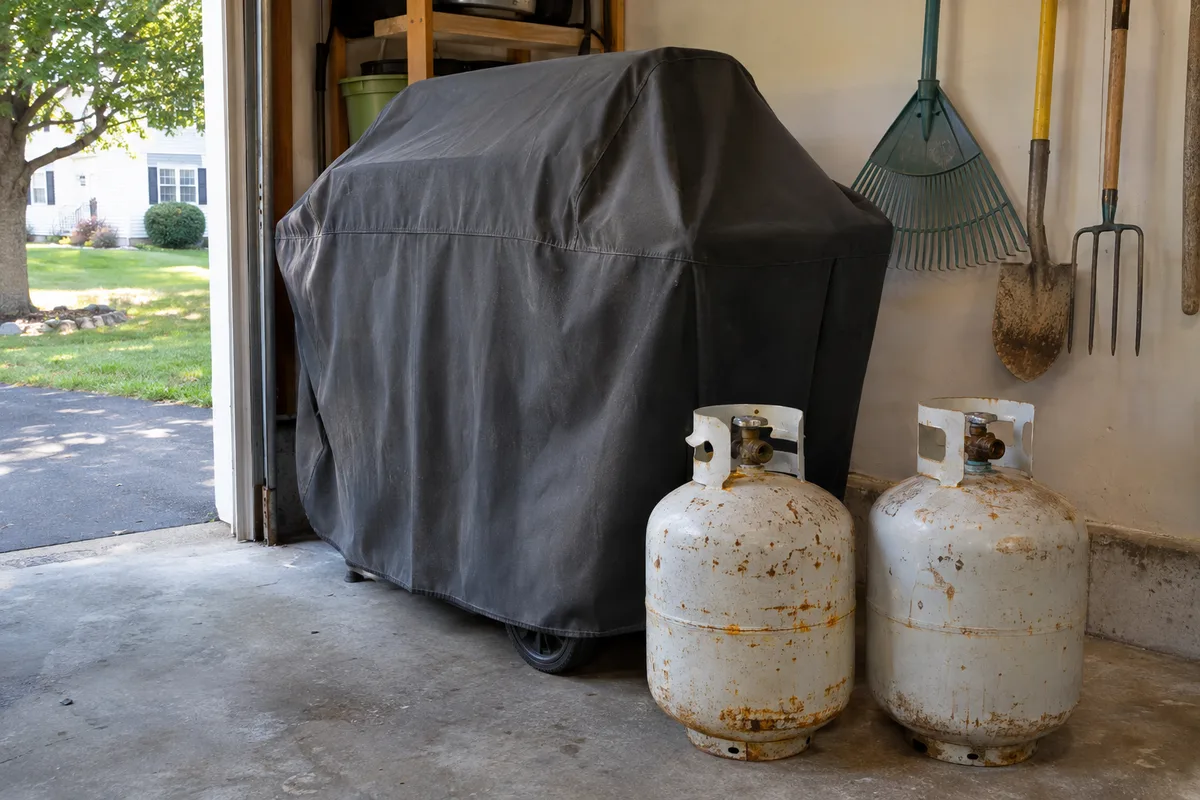
A propane tank is a pressure vessel holding flammable fuel, and it is never as empty as it looks. Hennepin County puts it plainly: a small amount of flammable gas remains even when the tank no longer supports a flame. The Connecticut Department of Energy and Environmental Protection (DEEP) warns that compaction in a dumpster or truck can rupture a cylinder and create an explosion hazard.
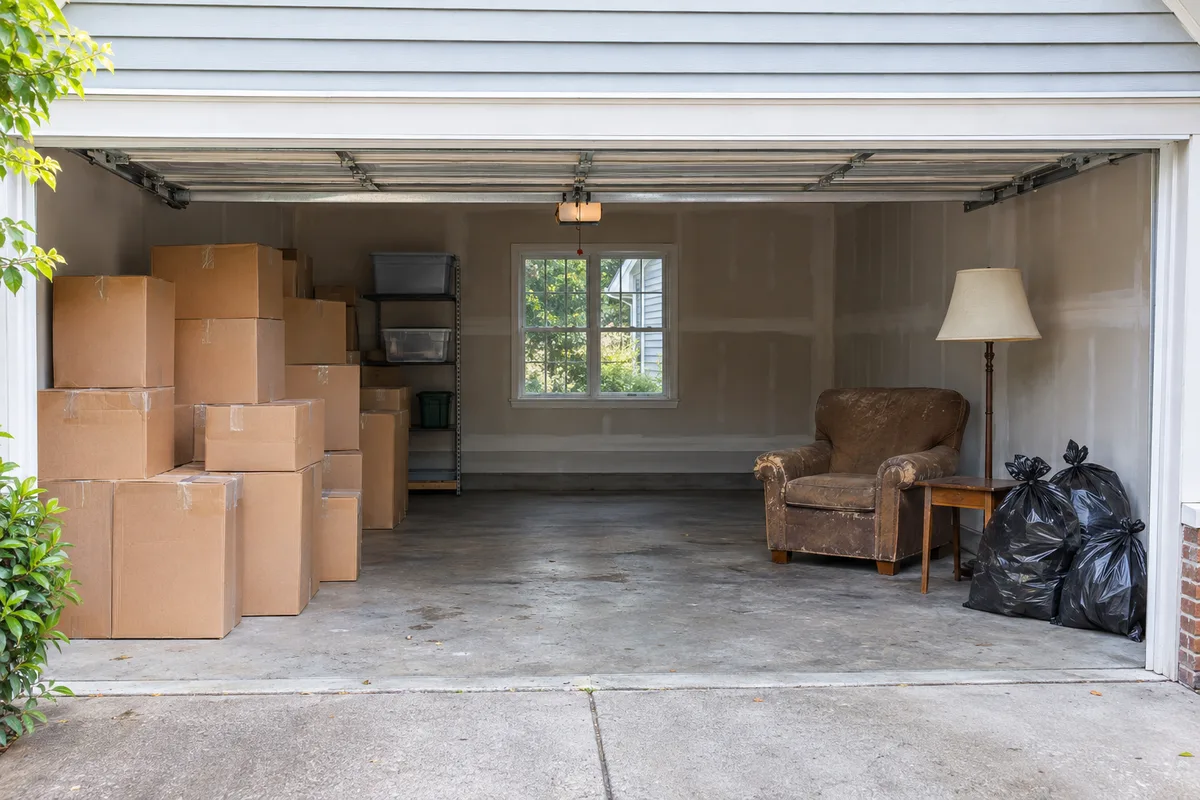
That is why propane tanks are on our list of items we do not take, along with fuels, motor oil, paint and other household hazardous waste. The rule is firm, and crews apply it on every job. If you are booking a garage cleanout, move the tanks to one side and point them out, and the crew will work around them.
Option 1: Exchange or Recycle Through a Tank Exchange Program
Tank exchange displays sit outside many gas stations, hardware stores and convenience stores. They are the easiest way out for a standard 20 lb grill tank.
Blue Rhino
If you want a full tank, swap your empty one for a filled one at the display. If you are done with propane, Blue Rhino has a recycling route:
- Write "R" or "RECYCLE" on the tank.
- Take it to any Blue Rhino location that is not a vending machine.
- If there is an empty spot in the display, tell a store employee you have a tank to recycle. If the display is full, try another store.
Blue Rhino says it accepts tanks for recycling at no cost to you. It refurbishes the tank if it can, and recycles it if it does not meet its safety and quality standards.
AmeriGas
AmeriGas runs tank exchange at partner gas stations, hardware stores and convenience stores. Its terms for retail partners say that "any and all customer cylinders will be accepted into the exchange program." The 20 lb cylinder it sells is filled with about 15 lb of propane. AmeriGas also offers a home swap service called Cynch: you leave your used standard grill tank in a spot the driver can reach, such as the porch or driveway, and the driver swaps it for a full one.
AmeriGas notes that an exchange can cost more than a refill, because the price covers the replacement cylinder, recycling or refurbishing your old one, and retailer costs.
Option 2: Refill It and Keep Using It
If the tank is in good shape, the cheapest choice is to keep it. AmeriGas calls refilling the most cost-effective option. A refill station fills your own tank, and you keep the same tank.
There are two limits. Connecticut DEEP says tanks are stamped with a manufacture date that starts a 12-year life span, and many tanks older than that are no longer fit for use. AmeriGas adds that if you refill, you are responsible for having the tank recertified on the schedule shown on the cylinder. Connecticut DEEP also notes that many dealers will not refill a tank that lacks an overfill prevention device (OPD). If your tank is too old or has the wrong valve, exchange or recycle it instead.
Option 3: A Propane Dealer or Gas Supplier
Connecticut DEEP says most people take old tanks to a local propane dealer or supplier, and that you should not expect a deposit back. The City of Albuquerque gives the same direction: take unusable or unwanted tanks, single-use or refillable, to a propane marketer, a pressurized gas retailer or a gas service company.
Call first. Ask whether they accept tanks they did not sell, whether there is a fee, and whether they take larger cylinders like the ones used for patio heaters or RVs.
Option 4: Household Hazardous Waste or Transfer Station
Many local programs accept propane cylinders, but the size limits vary a lot. Three examples we checked:
| Program | What it takes | Notes |
|---|---|---|
| Hennepin County, Minnesota | One-pound propane cylinders only | No charge at its Bloomington and Brooklyn Park drop-off facilities. No cylinders or tanks larger than one pound. |
| Sonoma County, California (Zero Waste Sonoma) | Cylinders 5 gallons and smaller at its household hazardous waste facility in Petaluma | Cylinders 5 gallons and larger go to a separate industrial site by appointment, for a fee. Propane cylinders cannot be recycled at the curb. |
| Connecticut (statewide guidance) | Empty tanks at your municipal transfer station, if it has one | DEEP also says to check whether your household hazardous waste program accepts them. |
Scrap yards are not a fallback. The City of Albuquerque says most scrap metal yards will not accept intact tanks, even empty ones, and Blue Rhino notes that many landfills, recycling facilities and scrap dealers refuse them. Search your county name plus "household hazardous waste" to find your local rules.
1 lb Camping Cylinders
The small green cylinders for camp stoves and lanterns are a separate problem. Most are single-use, and Zero Waste Sonoma calls them dangerous because they can still hold gas and pressure when they seem empty. That puts sanitation workers at risk of fires and explosions.
- Do not put them in the trash or the curbside recycling bin.
- Take them to your county's household hazardous waste site. Hennepin County takes them for free.
- Switch to refillable 1 lb cylinders. Zero Waste Sonoma and Connecticut DEEP both point to the Refuel Your Fun campaign (refuelyourfun.org), which lists places that sell and refill them.
Safety Rules for Old Tanks
These come from the county and state pages we checked:
- Do not throw a tank in the trash or put it in a dumpster or other disposal container.
- Do not try to remove the valve. It takes special equipment and training.
- Do not puncture a cylinder, or cut it with a torch or cutting wheel. Leftover propane can cause a fire or explosion.
- Store tanks upright, outdoors, and where they will not be knocked over or tampered with.
- Use up the gas in a disposable cylinder before you drop it off, and do not leave the valve open.
Getting Rid of the Grill Itself
Once the tank is disconnected and set aside, a gas grill is ordinary junk, and we haul it. A grill on its own is a single-item job, with a ballpark that starts at the $199 minimum, including loading and disposal. If it goes out with patio furniture or a load of garage clutter, the price moves up by the space the load takes: about one pickup bed (1/4 truck) starts around $290. See our junk removal service and pricing for the details.
Clearing the whole garage? Propane is one of several things that need their own route. Our guides to paint disposal and battery disposal cover two more. Set those aside, and get a free estimate for the rest. The crew confirms a firm price on-site before any work starts.
Sources we checked
- Blue Rhino, Recycling Tips (checked November 17, 2026)
- AmeriGas, Refill vs. Exchange and Cylinder Exchange Terms and Conditions (checked November 17, 2026)
- Connecticut Department of Energy and Environmental Protection, Recycling Propane Grill Tanks (checked November 17, 2026)
- Hennepin County, Tanks and cylinders: one-pound propane gas cylinders (checked November 17, 2026)
- Zero Waste Sonoma, Propane Cylinders Disposal (checked November 17, 2026)
- City of Albuquerque Solid Waste, Propane Gas Tank Disposal (checked November 17, 2026)
Frequently asked questions
Can I throw an empty propane tank in the trash?
No. Connecticut DEEP says not to put a tank in the trash or a dumpster, because compaction can rupture it, and Albuquerque warns an empty tank may explode in a garbage truck. Exchange it, return it to a dealer, or take it to a household hazardous waste site.
Does Junk Rhinos take propane tanks?
No. We do not take propane tanks of any size, full or empty. We will haul the grill, patio furniture and the rest of your junk once the tank is removed and set aside.
Can I exchange an expired propane tank?
Blue Rhino accepts unwanted tanks marked "R" or "RECYCLE" at its non-vending locations, and it recycles any tank that does not meet its standards. Ask at the store before you leave it.
What do I do with 1 lb camping propane cylinders?
Take them to your county's household hazardous waste program. Hennepin County, for example, takes them for free. Refillable 1 lb cylinders are a reusable option.
Will a scrap yard take an old propane tank?
Usually not. The City of Albuquerque says most scrap metal yards will not accept intact tanks, even empty ones. Call before you go.