Quick answer
Alkaline batteries (AA, AAA, C, D, 9V) are safe for your regular household trash in every state except California, which bans all batteries from landfills. Lithium-ion, lithium, and rechargeable batteries should never go in the trash or curbside recycling bin because they can spark fires in collection trucks; take them to a Call2Recycle drop-off instead. Car batteries get recycled free through core exchange at the auto parts store that sells you the replacement.
Jump to section
Knowing how to properly dispose of batteries by type matters more than most people realize. Battery disposal mistakes are a leading cause of fires at recycling centers and waste transfer stations, and the fix is simple once you know which battery goes where.
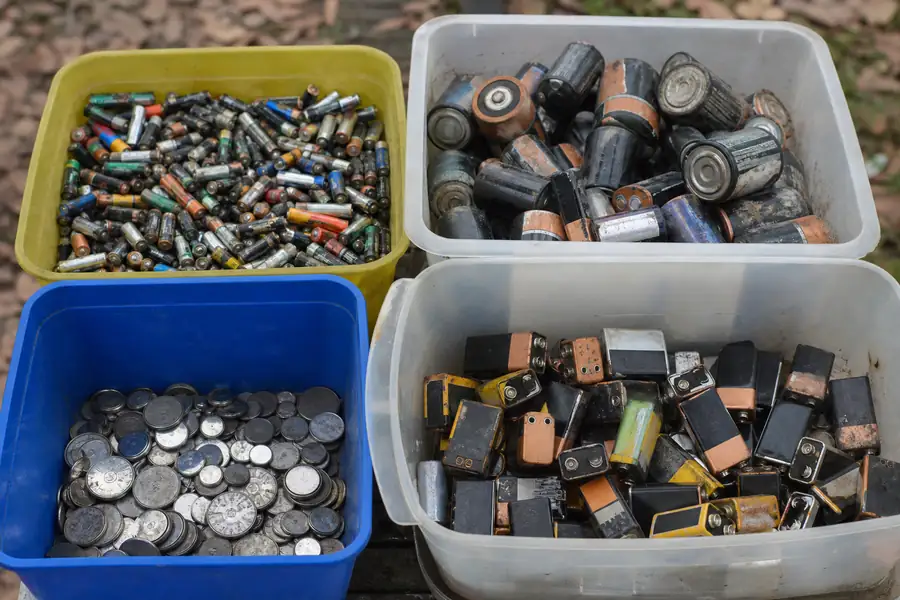
| Battery Type | Trash Safe? | Best Disposal Method | Key Risk |
|---|---|---|---|
| Alkaline (AA, AAA, C, D, 9V) | Yes, except CA | Trash or Call2Recycle | Low |
| Lithium-ion (phones, laptops, tools) | Never | Call2Recycle or e-waste recycler | Fire |
| Button or coin cell | Never | Call2Recycle drop-off | Fire, choking hazard |
| NiMH or NiCd rechargeable | Never | Call2Recycle drop-off | Fire |
| Car or lead-acid | Never | Retailer core exchange | Corrosive acid |
Why You Can't Just Toss Lithium-Ion Batteries in the Trash
Lithium-ion batteries start fires in garbage trucks and recycling facilities when their casings crack and the internal layers short out. That is why lithium battery recycling only happens through dedicated drop-off programs, never through curbside trash or recycling bins.
These batteries power phones, laptops, power tools, e-bikes, and vapes, and they hold a charge even after the device stops working. The EPA has flagged a rise in waste and recycling facility fires traced back to damaged lithium batteries tossed in with regular trash.
Call2Recycle runs thousands of free drop-off bins at hardware stores, office supply chains, and municipal recycling centers, and a quick search on their site will point you to the closest one. If you're clearing out a garage or office full of old electronics that still have batteries inside, Junk Rhinos' Electronics & E-Waste Recycling service hauls the devices themselves, though loose batteries pulled out of them still need to go to a dedicated recycler rather than in with the junk.
How to Dispose of Alkaline Batteries
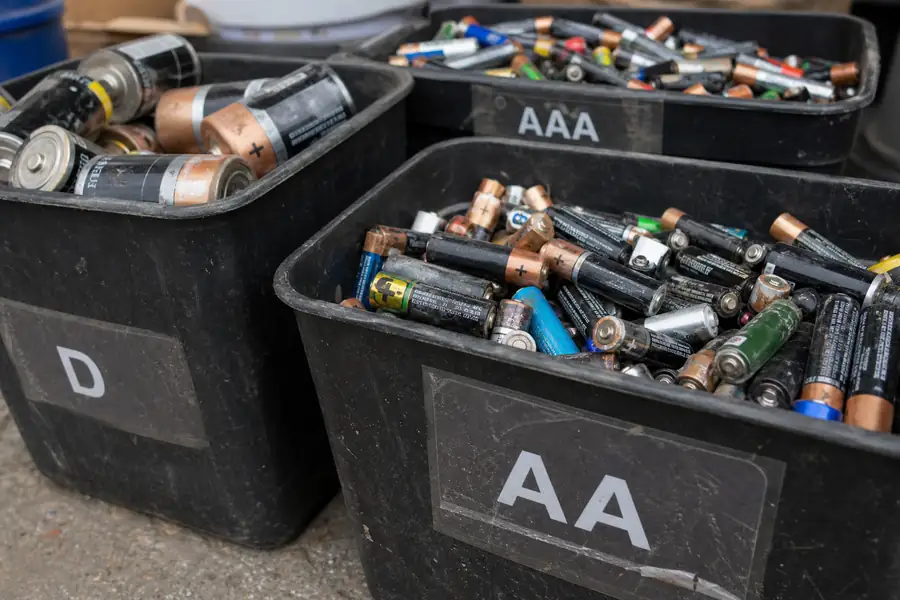
Alkaline batteries, the AA, AAA, C, D, and 9V cells found in remotes and flashlights, are safe for household trash in every state except California. Since 1996, federal law has required alkaline batteries to be made without added mercury, which is why most states classify them as ordinary household waste rather than hazardous material.
California treats all batteries, including alkaline, as universal waste and bans them from landfills regardless of chemistry. If you live there, or you would rather not toss them, drop them at any Call2Recycle bin or a hardware store collection box instead. There is no fee either way.
How to Dispose of Car and Other Lead-Acid Batteries
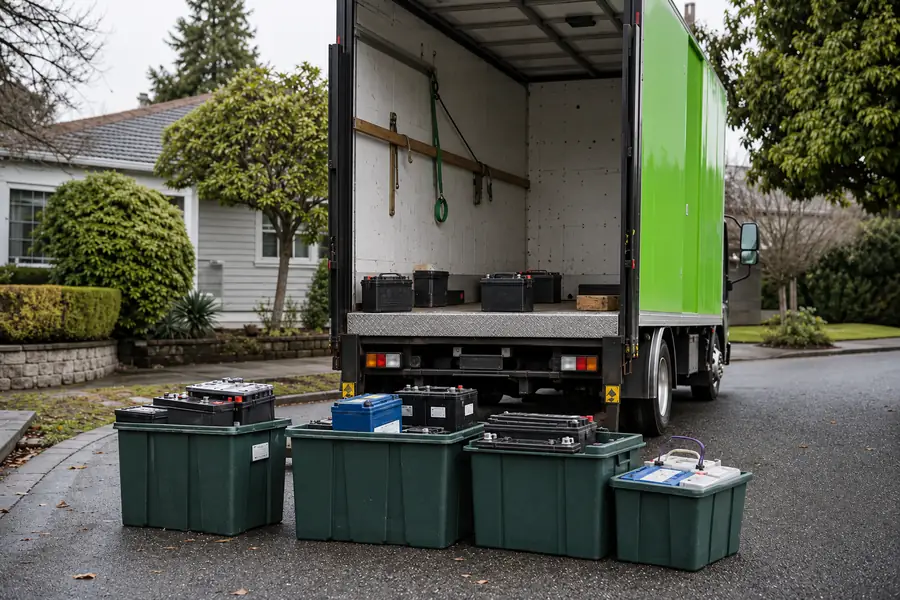
Car batteries get recycled free through core exchange: almost every auto parts store that sells you a new battery is required by state law to take the old lead-acid battery back, often with a deposit refund of $10 to $20 if you bring your old one in.
Lead-acid batteries contain lead plates and sulfuric acid, which makes them too hazardous for curbside trash or regular junk pickup, but also some of the most recycled products in the country because nearly every component gets reclaimed. Marine, motorcycle, and riding mower batteries follow the same rule: bring them to any retailer that sells replacements.
Tape the Terminals Before You Recycle or Toss Any Battery
Taping the terminals, the positive and negative contact points on each battery, stops it from short-circuiting against loose change, keys, or another battery in a bag or bin. That single step prevents most of the battery fires that start during transport or storage.
Use clear packing tape or electrical tape over both ends of cylindrical batteries, or bag 9V and button cell batteries individually, since their two terminals sit close enough together to touch. This matters most for lithium-ion and 9V batteries, but it is a good habit for every type you are setting aside for drop-off.
Where to Recycle Batteries for Free
Most battery recycling in the US costs nothing: Call2Recycle, retailer take-back programs, and municipal household hazardous waste days all accept batteries at no charge. A zip code search on the Call2Recycle website will usually turn up a bin at a hardware store, office supply store, or home improvement chain near you.
For the bigger picture on what else counts as e-waste and how it gets processed once it leaves your house, our e-waste recycling guide covers electronics beyond just batteries. And if you are not sure whether something in your pile counts as hazardous or regular junk, our FAQ page spells out exactly what Junk Rhinos crews can and cannot haul.
Frequently asked questions
Can I put batteries in my curbside recycling bin?
No. Most curbside recycling programs do not accept any type of battery because loose batteries can puncture or short-circuit inside sorting equipment. Take alkaline batteries to the trash instead (except in California), and bring lithium-ion, rechargeable, and button batteries to a Call2Recycle drop-off.
What happens if you throw a lithium battery in the trash?
A damaged or crushed lithium battery can ignite inside a garbage truck or at a waste sorting facility, since the compressed metal and chemicals inside react badly to punctures. This is one of the most common causes of fires at recycling centers, which is why lithium battery recycling only happens through dedicated drop-off programs.
Do I get money back for recycling a car battery?
Often, yes. Most auto parts stores offer a deposit refund, typically $10 to $20, when you trade in your old lead-acid battery for a new one, and some will still take the old battery for recycling even if you are not buying a replacement.
Are rechargeable AA and AAA batteries recyclable?
Yes. Rechargeable nickel-metal hydride and nickel-cadmium batteries should never go in the trash and need to go to a Call2Recycle drop-off or a retailer take-back bin, the same as lithium-ion batteries.
Is it illegal to throw away batteries in California?
Yes. California classifies all batteries, including standard alkaline AA and AAA cells, as universal waste and bans them from landfill disposal. Residents there need to use a battery drop-off location or household hazardous waste collection site for every battery type.